
It was good to be from Down Under at the 76th annual Academy Awards, held Feb. 29, 2004 at the Kodak Theatre in Hollywood: Not only did New Zealander Peter Jackson’s “Lord of the Rings: The Return of the King” sweep the evening with a record-tying 11 awards … but even when “LOTR” wasn’t a big winner, antipodean folks often walked away with the statues.
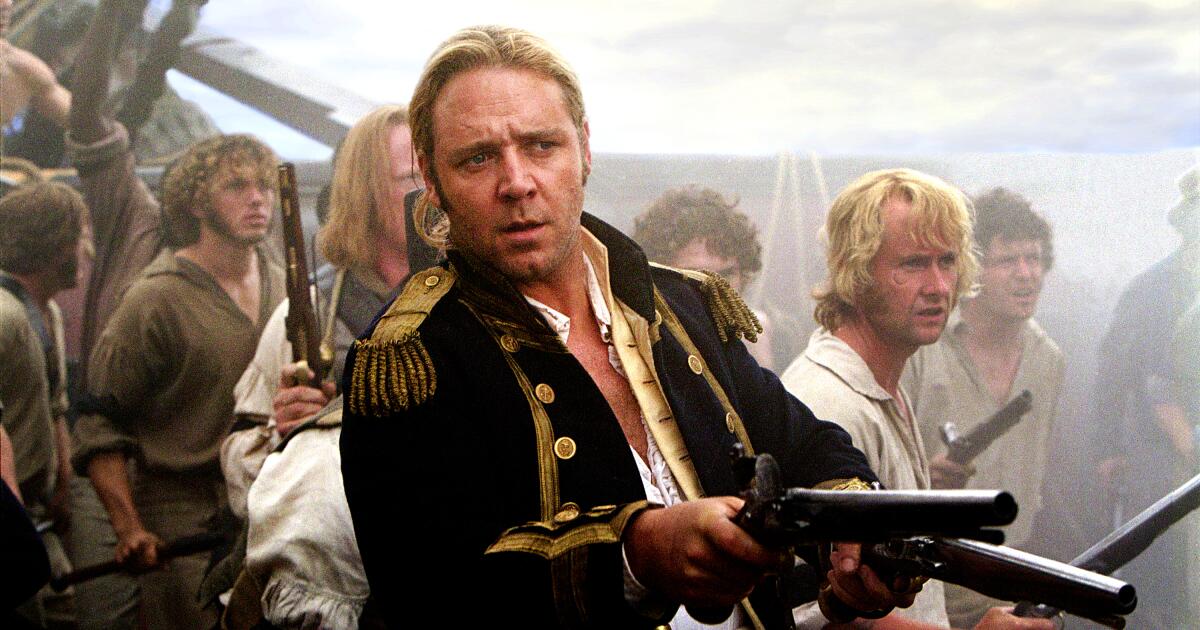
Such was the case with the cinematography category, as Jude Law and Uma Thurman presented veteran Russell Boyd with his first win, for “Master and Commander: The Far Side of the World.” Boyd made sure to give his credentials up front as he took to the stage for his acceptance speech.
“I have an Australian accent,” he noted, then thanked the academy, his cast and crew. He gave specific nods to several individuals he’d worked with but then singled out fellow Aussie director: “Most of all to Peter Weir, who provided extraordinary inspiration to all of us to give of our best.”
Cinematographer Russell Boyd is a frequent collaborator of director Peter Weir.
(Lawrence K. Ho / Los Angeles Times)
Boyd and Weir had partnered on films as far back as 1975 (“Picnic at Hanging Rock”); a brief résumé of Weir’s career shows that some of his best-known films include Boyd as DP — “The Last Wave” (1977), “Gallipoli” (1981) and “The Year of Living Dangerously” (1982). They would go on to work together on Weir’s final film (thus far), “The Way Back,” in 2010.
“ ‘Master and Commander,’ gee, that was a hard film to make,” Boyd told TheASC.com in 2018, noting that “The Way Back” was also a great challenge. “In a lot of ways, though, those are two of my proudest films. Peter Weir once said to me — and I’ll never forget it — he said, ‘Come and do a film of mine, and I’ll take you on an adventure.’ And he does!”
Boyd’s success meant another Australian was left behind, though: “Cold Mountain” cinematographer John Seale. Nominated five times, Seale has won once — in 1997 for “The English Patient.” He’d go on to be nominated again in 2016 for “Mad Max: Fury Road.” “Mountain” was just his latest effort with director Anthony Minghella; the pair also shared credits on “The English Patient” and 1999’s “The Talented Mr. Ripley.”
As it turned out, most nominees in the category had an international flair; only one of the five contenders was American — John Schwartzman, who shot “Seabiscuit.” It was the first and only nomination so far for the cinematographer, who’s the son of producer Jack Schwartzman, the stepson of Talia Shire and the half-brother of Jason and Robert Schwartzman.
Eduardo Serra (“Girl With a Pearl Earring”), meanwhile, is Portuguese and was on his second nomination that night; he’d also been singled out in 1998 for “The Wings of the Dove.” He’s known for making use of natural light almost exclusively, which made him an ideal match to shoot the film about the subject of a famous work by Johannes Vermeer — a painter known for his use of light.
“City of God” may have taken place in Rio de Janeiro, but cinematographer César Charlone is from Uruguay, and this was his first (and so far only) nomination in the category. He also directed the 2007 feature “The Pope’s Toilet,” which Uruguay submitted to the 80th Academy Awards, but it was not nominated.

It was good to be from Down Under at the 76th annual Academy Awards, held Feb. 29, 2004 at the Kodak Theatre in Hollywood: Not only did New Zealander Peter Jackson’s “Lord of the Rings: The Return of the King” sweep the evening with a record-tying 11 awards … but even when “LOTR” wasn’t a big winner, antipodean folks often walked away with the statues.
Such was the case with the cinematography category, as Jude Law and Uma Thurman presented veteran Russell Boyd with his first win, for “Master and Commander: The Far Side of the World.” Boyd made sure to give his credentials up front as he took to the stage for his acceptance speech.
“I have an Australian accent,” he noted, then thanked the academy, his cast and crew. He gave specific nods to several individuals he’d worked with but then singled out fellow Aussie director: “Most of all to Peter Weir, who provided extraordinary inspiration to all of us to give of our best.”
Cinematographer Russell Boyd is a frequent collaborator of director Peter Weir.
(Lawrence K. Ho / Los Angeles Times)
Boyd and Weir had partnered on films as far back as 1975 (“Picnic at Hanging Rock”); a brief résumé of Weir’s career shows that some of his best-known films include Boyd as DP — “The Last Wave” (1977), “Gallipoli” (1981) and “The Year of Living Dangerously” (1982). They would go on to work together on Weir’s final film (thus far), “The Way Back,” in 2010.
“ ‘Master and Commander,’ gee, that was a hard film to make,” Boyd told TheASC.com in 2018, noting that “The Way Back” was also a great challenge. “In a lot of ways, though, those are two of my proudest films. Peter Weir once said to me — and I’ll never forget it — he said, ‘Come and do a film of mine, and I’ll take you on an adventure.’ And he does!”
Boyd’s success meant another Australian was left behind, though: “Cold Mountain” cinematographer John Seale. Nominated five times, Seale has won once — in 1997 for “The English Patient.” He’d go on to be nominated again in 2016 for “Mad Max: Fury Road.” “Mountain” was just his latest effort with director Anthony Minghella; the pair also shared credits on “The English Patient” and 1999’s “The Talented Mr. Ripley.”
As it turned out, most nominees in the category had an international flair; only one of the five contenders was American — John Schwartzman, who shot “Seabiscuit.” It was the first and only nomination so far for the cinematographer, who’s the son of producer Jack Schwartzman, the stepson of Talia Shire and the half-brother of Jason and Robert Schwartzman.
Eduardo Serra (“Girl With a Pearl Earring”), meanwhile, is Portuguese and was on his second nomination that night; he’d also been singled out in 1998 for “The Wings of the Dove.” He’s known for making use of natural light almost exclusively, which made him an ideal match to shoot the film about the subject of a famous work by Johannes Vermeer — a painter known for his use of light.
“City of God” may have taken place in Rio de Janeiro, but cinematographer César Charlone is from Uruguay, and this was his first (and so far only) nomination in the category. He also directed the 2007 feature “The Pope’s Toilet,” which Uruguay submitted to the 80th Academy Awards, but it was not nominated.

It was good to be from Down Under at the 76th annual Academy Awards, held Feb. 29, 2004 at the Kodak Theatre in Hollywood: Not only did New Zealander Peter Jackson’s “Lord of the Rings: The Return of the King” sweep the evening with a record-tying 11 awards … but even when “LOTR” wasn’t a big winner, antipodean folks often walked away with the statues.
Such was the case with the cinematography category, as Jude Law and Uma Thurman presented veteran Russell Boyd with his first win, for “Master and Commander: The Far Side of the World.” Boyd made sure to give his credentials up front as he took to the stage for his acceptance speech.
“I have an Australian accent,” he noted, then thanked the academy, his cast and crew. He gave specific nods to several individuals he’d worked with but then singled out fellow Aussie director: “Most of all to Peter Weir, who provided extraordinary inspiration to all of us to give of our best.”
Cinematographer Russell Boyd is a frequent collaborator of director Peter Weir.
(Lawrence K. Ho / Los Angeles Times)
Boyd and Weir had partnered on films as far back as 1975 (“Picnic at Hanging Rock”); a brief résumé of Weir’s career shows that some of his best-known films include Boyd as DP — “The Last Wave” (1977), “Gallipoli” (1981) and “The Year of Living Dangerously” (1982). They would go on to work together on Weir’s final film (thus far), “The Way Back,” in 2010.
“ ‘Master and Commander,’ gee, that was a hard film to make,” Boyd told TheASC.com in 2018, noting that “The Way Back” was also a great challenge. “In a lot of ways, though, those are two of my proudest films. Peter Weir once said to me — and I’ll never forget it — he said, ‘Come and do a film of mine, and I’ll take you on an adventure.’ And he does!”
Boyd’s success meant another Australian was left behind, though: “Cold Mountain” cinematographer John Seale. Nominated five times, Seale has won once — in 1997 for “The English Patient.” He’d go on to be nominated again in 2016 for “Mad Max: Fury Road.” “Mountain” was just his latest effort with director Anthony Minghella; the pair also shared credits on “The English Patient” and 1999’s “The Talented Mr. Ripley.”
As it turned out, most nominees in the category had an international flair; only one of the five contenders was American — John Schwartzman, who shot “Seabiscuit.” It was the first and only nomination so far for the cinematographer, who’s the son of producer Jack Schwartzman, the stepson of Talia Shire and the half-brother of Jason and Robert Schwartzman.
Eduardo Serra (“Girl With a Pearl Earring”), meanwhile, is Portuguese and was on his second nomination that night; he’d also been singled out in 1998 for “The Wings of the Dove.” He’s known for making use of natural light almost exclusively, which made him an ideal match to shoot the film about the subject of a famous work by Johannes Vermeer — a painter known for his use of light.
“City of God” may have taken place in Rio de Janeiro, but cinematographer César Charlone is from Uruguay, and this was his first (and so far only) nomination in the category. He also directed the 2007 feature “The Pope’s Toilet,” which Uruguay submitted to the 80th Academy Awards, but it was not nominated.
It was good to be from Down Under at the 76th annual Academy Awards, held Feb. 29, 2004 at the Kodak Theatre in Hollywood: Not only did New Zealander Peter Jackson’s “Lord of the Rings: The Return of the King” sweep the evening with a record-tying 11 awards … but even when “LOTR” wasn’t a big winner, antipodean folks often walked away with the statues.
Such was the case with the cinematography category, as Jude Law and Uma Thurman presented veteran Russell Boyd with his first win, for “Master and Commander: The Far Side of the World.” Boyd made sure to give his credentials up front as he took to the stage for his acceptance speech.
“I have an Australian accent,” he noted, then thanked the academy, his cast and crew. He gave specific nods to several individuals he’d worked with but then singled out fellow Aussie director: “Most of all to Peter Weir, who provided extraordinary inspiration to all of us to give of our best.”
Cinematographer Russell Boyd is a frequent collaborator of director Peter Weir.
(Lawrence K. Ho / Los Angeles Times)
Boyd and Weir had partnered on films as far back as 1975 (“Picnic at Hanging Rock”); a brief résumé of Weir’s career shows that some of his best-known films include Boyd as DP — “The Last Wave” (1977), “Gallipoli” (1981) and “The Year of Living Dangerously” (1982). They would go on to work together on Weir’s final film (thus far), “The Way Back,” in 2010.
“ ‘Master and Commander,’ gee, that was a hard film to make,” Boyd told TheASC.com in 2018, noting that “The Way Back” was also a great challenge. “In a lot of ways, though, those are two of my proudest films. Peter Weir once said to me — and I’ll never forget it — he said, ‘Come and do a film of mine, and I’ll take you on an adventure.’ And he does!”
Boyd’s success meant another Australian was left behind, though: “Cold Mountain” cinematographer John Seale. Nominated five times, Seale has won once — in 1997 for “The English Patient.” He’d go on to be nominated again in 2016 for “Mad Max: Fury Road.” “Mountain” was just his latest effort with director Anthony Minghella; the pair also shared credits on “The English Patient” and 1999’s “The Talented Mr. Ripley.”
As it turned out, most nominees in the category had an international flair; only one of the five contenders was American — John Schwartzman, who shot “Seabiscuit.” It was the first and only nomination so far for the cinematographer, who’s the son of producer Jack Schwartzman, the stepson of Talia Shire and the half-brother of Jason and Robert Schwartzman.
Eduardo Serra (“Girl With a Pearl Earring”), meanwhile, is Portuguese and was on his second nomination that night; he’d also been singled out in 1998 for “The Wings of the Dove.” He’s known for making use of natural light almost exclusively, which made him an ideal match to shoot the film about the subject of a famous work by Johannes Vermeer — a painter known for his use of light.
“City of God” may have taken place in Rio de Janeiro, but cinematographer César Charlone is from Uruguay, and this was his first (and so far only) nomination in the category. He also directed the 2007 feature “The Pope’s Toilet,” which Uruguay submitted to the 80th Academy Awards, but it was not nominated.