Jazz pianist and singer Les McCann, best known for his raucous live single “Compared to What” from the 1969 Montreux Jazz Festival and later sampled heavily by hip-hop artists, died Friday at a Los Angeles-area hospital, according to his longtime manager and producer Alan Abrahams.
McCann, 88, had been living in a Van Nuys nursing facility and was hospitalized with pneumonia, said Abrahams, who declined to identify the hospital. McCann had been a longtime Van Nuys resident, Abrahams said.
“He was one of the most influential pianists and singers of all time,” said Abrahams, who called McCann an architect of soul jazz. “When he played live, all over the world, people would be enthralled, because he never played it safe. He always took it to the edge and succeeded at it and took the audience with him. For younger people, they’re not making any more Les McCanns.”
McCann’s music has been sampled by Notorious B.I.G., Pete Rock and C.L. Smooth, Warren G., Slick Rick, Dr. Dre, Mobb Deep, A Tribe Called Quest, De La Soul and Naughty by Nature, according to his website.
McCann relished his role as a live performer. “Well, some musicians only want to do it with the music,” McCann told The Times in 1992. “I like to be funny. I like to mess with people, shake ‘em up a little bit. So I do outrageous things sometimes. I know who I am, and people who know me wish I would do more outrageous things — like I do at home. They say, ‘What’s wrong with you? You’re so conservative on the bandstand.’
“That’s all I need, to go into my routine. My routine is love, and that’s what I am. I’m a channel of love. I accept my role.”
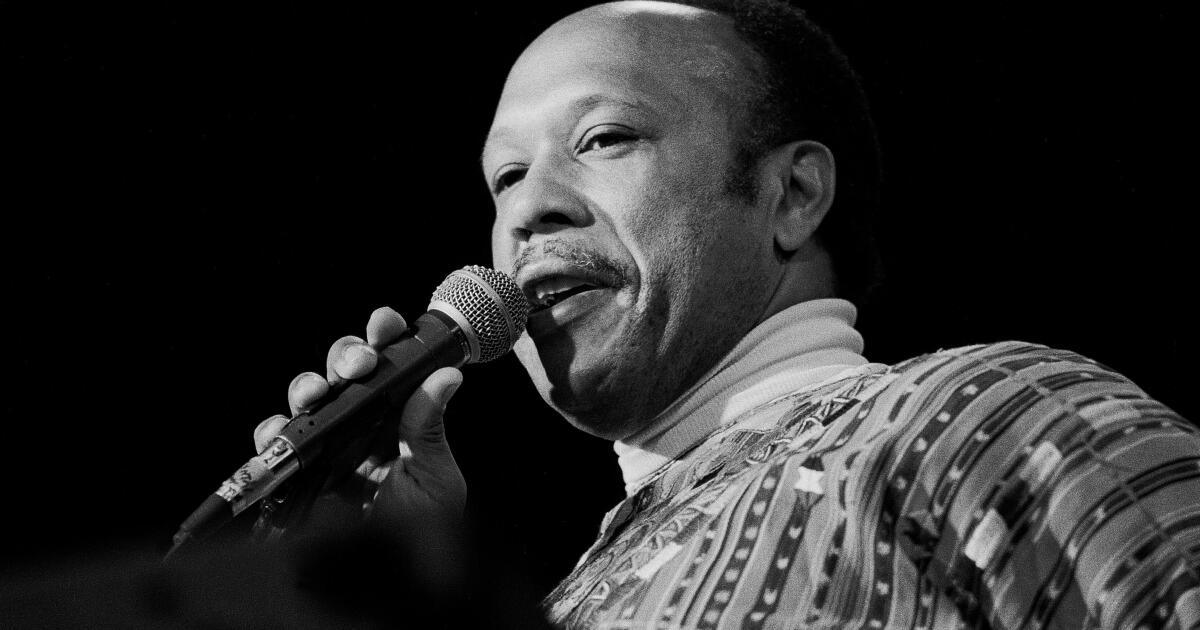
McCann during the opening of the 40th Montreux Jazz Festival in 2006.
(Martial Trezzini / Keystone via AP)
Les McCann was born Sept. 23, 1935, in Lexington, Ky., Abrahams said. A largely self-taught musician, McCann joined the Navy in the 1950s and was stationed in California, where he patronized San Francisco’s jazz clubs, encountered trumpeter Miles Davis’ music and was strongly influenced by pianist Erroll Garner, according to his biography from the Kentucky Music Hall of Fame. In 1956, he won a Navy talent contest as a singer and appeared on the “Ed Sullivan Show,” according to the 2007 book “The Biographical Encyclopedia of Jazz.”
He moved to Los Angeles after being discharged, where he formed the Les McCann Ltd. trio and was signed by the L.A.-based Pacific Jazz label.
A prolific performer and collaborator, it was McCann’s appearance at the 1969 Montreux Jazz Festival in Switzerland with saxophonist Eddie Harris, and the ensuing live album “Swiss Movement,” that secured McCann’s international notoriety and his place in the jazz canon. In the hit single “Compared to What,” a rollicking protest anthem against President Nixon and the Vietnam War, McCann sings, “The President, he’s got his war / Folks don’t know just what it’s for / Nobody gives us rhyme or reason / Have one doubt, they call it treason.”
The album was a crossover hit. “The witty, laid-back social commentary McCann delivered on the album’s signature tune, ‘Compared to What,’ appealed to both middle-age ex-beatniks and their rock-loving, hippie-era offspring,” The Times recounted in 1992, as “Swiss Movement” remained a steady seller.
One of McCann’s other major contributions to music happened offstage, at a Washington, D.C., nightclub, where he discovered up-and-coming singer Roberta Flack and introduced her to his producer.
McCann, who recorded dozens of other albums and pioneered the use of electronic keyboards in jazz, also explored creative forms beyond music.
“I would love to have a whole lot of money. Who wouldn’t? But I love what I do. I love the other things I do. I play tennis, paint. A new thing I’m just starting is making giant prints of photographs I’ve taken of jazz musicians,” McCann told The Times in 1992. “I’ve read a lot, studied all the religions … My guru is me, the only one I know I can fully trust to be honest with me is me. I love myself beyond all others, and by doing that, I can love everyone else. I see myself as a channel of love.”
In 1995, McCann was slowed by a stroke while in tour in Zelle, Germany, that left him partially paralyzed, though he was able to continue performing afterward, focusing more on vocals.
“He was bold and a pioneer on so many levels,” Abrahams said, noting that the sampling of McCann’s music had extended his influence across generations. “The rap and hip-hop artists all knew, because they would do the deep dive into their parents’ LP bins.”

Jazz pianist and singer Les McCann, best known for his raucous live single “Compared to What” from the 1969 Montreux Jazz Festival and later sampled heavily by hip-hop artists, died Friday at a Los Angeles-area hospital, according to his longtime manager and producer Alan Abrahams.
McCann, 88, had been living in a Van Nuys nursing facility and was hospitalized with pneumonia, said Abrahams, who declined to identify the hospital. McCann had been a longtime Van Nuys resident, Abrahams said.
“He was one of the most influential pianists and singers of all time,” said Abrahams, who called McCann an architect of soul jazz. “When he played live, all over the world, people would be enthralled, because he never played it safe. He always took it to the edge and succeeded at it and took the audience with him. For younger people, they’re not making any more Les McCanns.”
McCann’s music has been sampled by Notorious B.I.G., Pete Rock and C.L. Smooth, Warren G., Slick Rick, Dr. Dre, Mobb Deep, A Tribe Called Quest, De La Soul and Naughty by Nature, according to his website.
McCann relished his role as a live performer. “Well, some musicians only want to do it with the music,” McCann told The Times in 1992. “I like to be funny. I like to mess with people, shake ‘em up a little bit. So I do outrageous things sometimes. I know who I am, and people who know me wish I would do more outrageous things — like I do at home. They say, ‘What’s wrong with you? You’re so conservative on the bandstand.’
“That’s all I need, to go into my routine. My routine is love, and that’s what I am. I’m a channel of love. I accept my role.”
McCann during the opening of the 40th Montreux Jazz Festival in 2006.
(Martial Trezzini / Keystone via AP)
Les McCann was born Sept. 23, 1935, in Lexington, Ky., Abrahams said. A largely self-taught musician, McCann joined the Navy in the 1950s and was stationed in California, where he patronized San Francisco’s jazz clubs, encountered trumpeter Miles Davis’ music and was strongly influenced by pianist Erroll Garner, according to his biography from the Kentucky Music Hall of Fame. In 1956, he won a Navy talent contest as a singer and appeared on the “Ed Sullivan Show,” according to the 2007 book “The Biographical Encyclopedia of Jazz.”
He moved to Los Angeles after being discharged, where he formed the Les McCann Ltd. trio and was signed by the L.A.-based Pacific Jazz label.
A prolific performer and collaborator, it was McCann’s appearance at the 1969 Montreux Jazz Festival in Switzerland with saxophonist Eddie Harris, and the ensuing live album “Swiss Movement,” that secured McCann’s international notoriety and his place in the jazz canon. In the hit single “Compared to What,” a rollicking protest anthem against President Nixon and the Vietnam War, McCann sings, “The President, he’s got his war / Folks don’t know just what it’s for / Nobody gives us rhyme or reason / Have one doubt, they call it treason.”
The album was a crossover hit. “The witty, laid-back social commentary McCann delivered on the album’s signature tune, ‘Compared to What,’ appealed to both middle-age ex-beatniks and their rock-loving, hippie-era offspring,” The Times recounted in 1992, as “Swiss Movement” remained a steady seller.
One of McCann’s other major contributions to music happened offstage, at a Washington, D.C., nightclub, where he discovered up-and-coming singer Roberta Flack and introduced her to his producer.
McCann, who recorded dozens of other albums and pioneered the use of electronic keyboards in jazz, also explored creative forms beyond music.
“I would love to have a whole lot of money. Who wouldn’t? But I love what I do. I love the other things I do. I play tennis, paint. A new thing I’m just starting is making giant prints of photographs I’ve taken of jazz musicians,” McCann told The Times in 1992. “I’ve read a lot, studied all the religions … My guru is me, the only one I know I can fully trust to be honest with me is me. I love myself beyond all others, and by doing that, I can love everyone else. I see myself as a channel of love.”
In 1995, McCann was slowed by a stroke while in tour in Zelle, Germany, that left him partially paralyzed, though he was able to continue performing afterward, focusing more on vocals.
“He was bold and a pioneer on so many levels,” Abrahams said, noting that the sampling of McCann’s music had extended his influence across generations. “The rap and hip-hop artists all knew, because they would do the deep dive into their parents’ LP bins.”

Jazz pianist and singer Les McCann, best known for his raucous live single “Compared to What” from the 1969 Montreux Jazz Festival and later sampled heavily by hip-hop artists, died Friday at a Los Angeles-area hospital, according to his longtime manager and producer Alan Abrahams.
McCann, 88, had been living in a Van Nuys nursing facility and was hospitalized with pneumonia, said Abrahams, who declined to identify the hospital. McCann had been a longtime Van Nuys resident, Abrahams said.
“He was one of the most influential pianists and singers of all time,” said Abrahams, who called McCann an architect of soul jazz. “When he played live, all over the world, people would be enthralled, because he never played it safe. He always took it to the edge and succeeded at it and took the audience with him. For younger people, they’re not making any more Les McCanns.”
McCann’s music has been sampled by Notorious B.I.G., Pete Rock and C.L. Smooth, Warren G., Slick Rick, Dr. Dre, Mobb Deep, A Tribe Called Quest, De La Soul and Naughty by Nature, according to his website.
McCann relished his role as a live performer. “Well, some musicians only want to do it with the music,” McCann told The Times in 1992. “I like to be funny. I like to mess with people, shake ‘em up a little bit. So I do outrageous things sometimes. I know who I am, and people who know me wish I would do more outrageous things — like I do at home. They say, ‘What’s wrong with you? You’re so conservative on the bandstand.’
“That’s all I need, to go into my routine. My routine is love, and that’s what I am. I’m a channel of love. I accept my role.”
McCann during the opening of the 40th Montreux Jazz Festival in 2006.
(Martial Trezzini / Keystone via AP)
Les McCann was born Sept. 23, 1935, in Lexington, Ky., Abrahams said. A largely self-taught musician, McCann joined the Navy in the 1950s and was stationed in California, where he patronized San Francisco’s jazz clubs, encountered trumpeter Miles Davis’ music and was strongly influenced by pianist Erroll Garner, according to his biography from the Kentucky Music Hall of Fame. In 1956, he won a Navy talent contest as a singer and appeared on the “Ed Sullivan Show,” according to the 2007 book “The Biographical Encyclopedia of Jazz.”
He moved to Los Angeles after being discharged, where he formed the Les McCann Ltd. trio and was signed by the L.A.-based Pacific Jazz label.
A prolific performer and collaborator, it was McCann’s appearance at the 1969 Montreux Jazz Festival in Switzerland with saxophonist Eddie Harris, and the ensuing live album “Swiss Movement,” that secured McCann’s international notoriety and his place in the jazz canon. In the hit single “Compared to What,” a rollicking protest anthem against President Nixon and the Vietnam War, McCann sings, “The President, he’s got his war / Folks don’t know just what it’s for / Nobody gives us rhyme or reason / Have one doubt, they call it treason.”
The album was a crossover hit. “The witty, laid-back social commentary McCann delivered on the album’s signature tune, ‘Compared to What,’ appealed to both middle-age ex-beatniks and their rock-loving, hippie-era offspring,” The Times recounted in 1992, as “Swiss Movement” remained a steady seller.
One of McCann’s other major contributions to music happened offstage, at a Washington, D.C., nightclub, where he discovered up-and-coming singer Roberta Flack and introduced her to his producer.
McCann, who recorded dozens of other albums and pioneered the use of electronic keyboards in jazz, also explored creative forms beyond music.
“I would love to have a whole lot of money. Who wouldn’t? But I love what I do. I love the other things I do. I play tennis, paint. A new thing I’m just starting is making giant prints of photographs I’ve taken of jazz musicians,” McCann told The Times in 1992. “I’ve read a lot, studied all the religions … My guru is me, the only one I know I can fully trust to be honest with me is me. I love myself beyond all others, and by doing that, I can love everyone else. I see myself as a channel of love.”
In 1995, McCann was slowed by a stroke while in tour in Zelle, Germany, that left him partially paralyzed, though he was able to continue performing afterward, focusing more on vocals.
“He was bold and a pioneer on so many levels,” Abrahams said, noting that the sampling of McCann’s music had extended his influence across generations. “The rap and hip-hop artists all knew, because they would do the deep dive into their parents’ LP bins.”
Jazz pianist and singer Les McCann, best known for his raucous live single “Compared to What” from the 1969 Montreux Jazz Festival and later sampled heavily by hip-hop artists, died Friday at a Los Angeles-area hospital, according to his longtime manager and producer Alan Abrahams.
McCann, 88, had been living in a Van Nuys nursing facility and was hospitalized with pneumonia, said Abrahams, who declined to identify the hospital. McCann had been a longtime Van Nuys resident, Abrahams said.
“He was one of the most influential pianists and singers of all time,” said Abrahams, who called McCann an architect of soul jazz. “When he played live, all over the world, people would be enthralled, because he never played it safe. He always took it to the edge and succeeded at it and took the audience with him. For younger people, they’re not making any more Les McCanns.”
McCann’s music has been sampled by Notorious B.I.G., Pete Rock and C.L. Smooth, Warren G., Slick Rick, Dr. Dre, Mobb Deep, A Tribe Called Quest, De La Soul and Naughty by Nature, according to his website.
McCann relished his role as a live performer. “Well, some musicians only want to do it with the music,” McCann told The Times in 1992. “I like to be funny. I like to mess with people, shake ‘em up a little bit. So I do outrageous things sometimes. I know who I am, and people who know me wish I would do more outrageous things — like I do at home. They say, ‘What’s wrong with you? You’re so conservative on the bandstand.’
“That’s all I need, to go into my routine. My routine is love, and that’s what I am. I’m a channel of love. I accept my role.”
McCann during the opening of the 40th Montreux Jazz Festival in 2006.
(Martial Trezzini / Keystone via AP)
Les McCann was born Sept. 23, 1935, in Lexington, Ky., Abrahams said. A largely self-taught musician, McCann joined the Navy in the 1950s and was stationed in California, where he patronized San Francisco’s jazz clubs, encountered trumpeter Miles Davis’ music and was strongly influenced by pianist Erroll Garner, according to his biography from the Kentucky Music Hall of Fame. In 1956, he won a Navy talent contest as a singer and appeared on the “Ed Sullivan Show,” according to the 2007 book “The Biographical Encyclopedia of Jazz.”
He moved to Los Angeles after being discharged, where he formed the Les McCann Ltd. trio and was signed by the L.A.-based Pacific Jazz label.
A prolific performer and collaborator, it was McCann’s appearance at the 1969 Montreux Jazz Festival in Switzerland with saxophonist Eddie Harris, and the ensuing live album “Swiss Movement,” that secured McCann’s international notoriety and his place in the jazz canon. In the hit single “Compared to What,” a rollicking protest anthem against President Nixon and the Vietnam War, McCann sings, “The President, he’s got his war / Folks don’t know just what it’s for / Nobody gives us rhyme or reason / Have one doubt, they call it treason.”
The album was a crossover hit. “The witty, laid-back social commentary McCann delivered on the album’s signature tune, ‘Compared to What,’ appealed to both middle-age ex-beatniks and their rock-loving, hippie-era offspring,” The Times recounted in 1992, as “Swiss Movement” remained a steady seller.
One of McCann’s other major contributions to music happened offstage, at a Washington, D.C., nightclub, where he discovered up-and-coming singer Roberta Flack and introduced her to his producer.
McCann, who recorded dozens of other albums and pioneered the use of electronic keyboards in jazz, also explored creative forms beyond music.
“I would love to have a whole lot of money. Who wouldn’t? But I love what I do. I love the other things I do. I play tennis, paint. A new thing I’m just starting is making giant prints of photographs I’ve taken of jazz musicians,” McCann told The Times in 1992. “I’ve read a lot, studied all the religions … My guru is me, the only one I know I can fully trust to be honest with me is me. I love myself beyond all others, and by doing that, I can love everyone else. I see myself as a channel of love.”
In 1995, McCann was slowed by a stroke while in tour in Zelle, Germany, that left him partially paralyzed, though he was able to continue performing afterward, focusing more on vocals.
“He was bold and a pioneer on so many levels,” Abrahams said, noting that the sampling of McCann’s music had extended his influence across generations. “The rap and hip-hop artists all knew, because they would do the deep dive into their parents’ LP bins.”

Jazz pianist and singer Les McCann, best known for his raucous live single “Compared to What” from the 1969 Montreux Jazz Festival and later sampled heavily by hip-hop artists, died Friday at a Los Angeles-area hospital, according to his longtime manager and producer Alan Abrahams.
McCann, 88, had been living in a Van Nuys nursing facility and was hospitalized with pneumonia, said Abrahams, who declined to identify the hospital. McCann had been a longtime Van Nuys resident, Abrahams said.
“He was one of the most influential pianists and singers of all time,” said Abrahams, who called McCann an architect of soul jazz. “When he played live, all over the world, people would be enthralled, because he never played it safe. He always took it to the edge and succeeded at it and took the audience with him. For younger people, they’re not making any more Les McCanns.”
McCann’s music has been sampled by Notorious B.I.G., Pete Rock and C.L. Smooth, Warren G., Slick Rick, Dr. Dre, Mobb Deep, A Tribe Called Quest, De La Soul and Naughty by Nature, according to his website.
McCann relished his role as a live performer. “Well, some musicians only want to do it with the music,” McCann told The Times in 1992. “I like to be funny. I like to mess with people, shake ‘em up a little bit. So I do outrageous things sometimes. I know who I am, and people who know me wish I would do more outrageous things — like I do at home. They say, ‘What’s wrong with you? You’re so conservative on the bandstand.’
“That’s all I need, to go into my routine. My routine is love, and that’s what I am. I’m a channel of love. I accept my role.”
McCann during the opening of the 40th Montreux Jazz Festival in 2006.
(Martial Trezzini / Keystone via AP)
Les McCann was born Sept. 23, 1935, in Lexington, Ky., Abrahams said. A largely self-taught musician, McCann joined the Navy in the 1950s and was stationed in California, where he patronized San Francisco’s jazz clubs, encountered trumpeter Miles Davis’ music and was strongly influenced by pianist Erroll Garner, according to his biography from the Kentucky Music Hall of Fame. In 1956, he won a Navy talent contest as a singer and appeared on the “Ed Sullivan Show,” according to the 2007 book “The Biographical Encyclopedia of Jazz.”
He moved to Los Angeles after being discharged, where he formed the Les McCann Ltd. trio and was signed by the L.A.-based Pacific Jazz label.
A prolific performer and collaborator, it was McCann’s appearance at the 1969 Montreux Jazz Festival in Switzerland with saxophonist Eddie Harris, and the ensuing live album “Swiss Movement,” that secured McCann’s international notoriety and his place in the jazz canon. In the hit single “Compared to What,” a rollicking protest anthem against President Nixon and the Vietnam War, McCann sings, “The President, he’s got his war / Folks don’t know just what it’s for / Nobody gives us rhyme or reason / Have one doubt, they call it treason.”
The album was a crossover hit. “The witty, laid-back social commentary McCann delivered on the album’s signature tune, ‘Compared to What,’ appealed to both middle-age ex-beatniks and their rock-loving, hippie-era offspring,” The Times recounted in 1992, as “Swiss Movement” remained a steady seller.
One of McCann’s other major contributions to music happened offstage, at a Washington, D.C., nightclub, where he discovered up-and-coming singer Roberta Flack and introduced her to his producer.
McCann, who recorded dozens of other albums and pioneered the use of electronic keyboards in jazz, also explored creative forms beyond music.
“I would love to have a whole lot of money. Who wouldn’t? But I love what I do. I love the other things I do. I play tennis, paint. A new thing I’m just starting is making giant prints of photographs I’ve taken of jazz musicians,” McCann told The Times in 1992. “I’ve read a lot, studied all the religions … My guru is me, the only one I know I can fully trust to be honest with me is me. I love myself beyond all others, and by doing that, I can love everyone else. I see myself as a channel of love.”
In 1995, McCann was slowed by a stroke while in tour in Zelle, Germany, that left him partially paralyzed, though he was able to continue performing afterward, focusing more on vocals.
“He was bold and a pioneer on so many levels,” Abrahams said, noting that the sampling of McCann’s music had extended his influence across generations. “The rap and hip-hop artists all knew, because they would do the deep dive into their parents’ LP bins.”
Jazz pianist and singer Les McCann, best known for his raucous live single “Compared to What” from the 1969 Montreux Jazz Festival and later sampled heavily by hip-hop artists, died Friday at a Los Angeles-area hospital, according to his longtime manager and producer Alan Abrahams.
McCann, 88, had been living in a Van Nuys nursing facility and was hospitalized with pneumonia, said Abrahams, who declined to identify the hospital. McCann had been a longtime Van Nuys resident, Abrahams said.
“He was one of the most influential pianists and singers of all time,” said Abrahams, who called McCann an architect of soul jazz. “When he played live, all over the world, people would be enthralled, because he never played it safe. He always took it to the edge and succeeded at it and took the audience with him. For younger people, they’re not making any more Les McCanns.”
McCann’s music has been sampled by Notorious B.I.G., Pete Rock and C.L. Smooth, Warren G., Slick Rick, Dr. Dre, Mobb Deep, A Tribe Called Quest, De La Soul and Naughty by Nature, according to his website.
McCann relished his role as a live performer. “Well, some musicians only want to do it with the music,” McCann told The Times in 1992. “I like to be funny. I like to mess with people, shake ‘em up a little bit. So I do outrageous things sometimes. I know who I am, and people who know me wish I would do more outrageous things — like I do at home. They say, ‘What’s wrong with you? You’re so conservative on the bandstand.’
“That’s all I need, to go into my routine. My routine is love, and that’s what I am. I’m a channel of love. I accept my role.”
McCann during the opening of the 40th Montreux Jazz Festival in 2006.
(Martial Trezzini / Keystone via AP)
Les McCann was born Sept. 23, 1935, in Lexington, Ky., Abrahams said. A largely self-taught musician, McCann joined the Navy in the 1950s and was stationed in California, where he patronized San Francisco’s jazz clubs, encountered trumpeter Miles Davis’ music and was strongly influenced by pianist Erroll Garner, according to his biography from the Kentucky Music Hall of Fame. In 1956, he won a Navy talent contest as a singer and appeared on the “Ed Sullivan Show,” according to the 2007 book “The Biographical Encyclopedia of Jazz.”
He moved to Los Angeles after being discharged, where he formed the Les McCann Ltd. trio and was signed by the L.A.-based Pacific Jazz label.
A prolific performer and collaborator, it was McCann’s appearance at the 1969 Montreux Jazz Festival in Switzerland with saxophonist Eddie Harris, and the ensuing live album “Swiss Movement,” that secured McCann’s international notoriety and his place in the jazz canon. In the hit single “Compared to What,” a rollicking protest anthem against President Nixon and the Vietnam War, McCann sings, “The President, he’s got his war / Folks don’t know just what it’s for / Nobody gives us rhyme or reason / Have one doubt, they call it treason.”
The album was a crossover hit. “The witty, laid-back social commentary McCann delivered on the album’s signature tune, ‘Compared to What,’ appealed to both middle-age ex-beatniks and their rock-loving, hippie-era offspring,” The Times recounted in 1992, as “Swiss Movement” remained a steady seller.
One of McCann’s other major contributions to music happened offstage, at a Washington, D.C., nightclub, where he discovered up-and-coming singer Roberta Flack and introduced her to his producer.
McCann, who recorded dozens of other albums and pioneered the use of electronic keyboards in jazz, also explored creative forms beyond music.
“I would love to have a whole lot of money. Who wouldn’t? But I love what I do. I love the other things I do. I play tennis, paint. A new thing I’m just starting is making giant prints of photographs I’ve taken of jazz musicians,” McCann told The Times in 1992. “I’ve read a lot, studied all the religions … My guru is me, the only one I know I can fully trust to be honest with me is me. I love myself beyond all others, and by doing that, I can love everyone else. I see myself as a channel of love.”
In 1995, McCann was slowed by a stroke while in tour in Zelle, Germany, that left him partially paralyzed, though he was able to continue performing afterward, focusing more on vocals.
“He was bold and a pioneer on so many levels,” Abrahams said, noting that the sampling of McCann’s music had extended his influence across generations. “The rap and hip-hop artists all knew, because they would do the deep dive into their parents’ LP bins.”
Jazz pianist and singer Les McCann, best known for his raucous live single “Compared to What” from the 1969 Montreux Jazz Festival and later sampled heavily by hip-hop artists, died Friday at a Los Angeles-area hospital, according to his longtime manager and producer Alan Abrahams.
McCann, 88, had been living in a Van Nuys nursing facility and was hospitalized with pneumonia, said Abrahams, who declined to identify the hospital. McCann had been a longtime Van Nuys resident, Abrahams said.
“He was one of the most influential pianists and singers of all time,” said Abrahams, who called McCann an architect of soul jazz. “When he played live, all over the world, people would be enthralled, because he never played it safe. He always took it to the edge and succeeded at it and took the audience with him. For younger people, they’re not making any more Les McCanns.”
McCann’s music has been sampled by Notorious B.I.G., Pete Rock and C.L. Smooth, Warren G., Slick Rick, Dr. Dre, Mobb Deep, A Tribe Called Quest, De La Soul and Naughty by Nature, according to his website.
McCann relished his role as a live performer. “Well, some musicians only want to do it with the music,” McCann told The Times in 1992. “I like to be funny. I like to mess with people, shake ‘em up a little bit. So I do outrageous things sometimes. I know who I am, and people who know me wish I would do more outrageous things — like I do at home. They say, ‘What’s wrong with you? You’re so conservative on the bandstand.’
“That’s all I need, to go into my routine. My routine is love, and that’s what I am. I’m a channel of love. I accept my role.”
McCann during the opening of the 40th Montreux Jazz Festival in 2006.
(Martial Trezzini / Keystone via AP)
Les McCann was born Sept. 23, 1935, in Lexington, Ky., Abrahams said. A largely self-taught musician, McCann joined the Navy in the 1950s and was stationed in California, where he patronized San Francisco’s jazz clubs, encountered trumpeter Miles Davis’ music and was strongly influenced by pianist Erroll Garner, according to his biography from the Kentucky Music Hall of Fame. In 1956, he won a Navy talent contest as a singer and appeared on the “Ed Sullivan Show,” according to the 2007 book “The Biographical Encyclopedia of Jazz.”
He moved to Los Angeles after being discharged, where he formed the Les McCann Ltd. trio and was signed by the L.A.-based Pacific Jazz label.
A prolific performer and collaborator, it was McCann’s appearance at the 1969 Montreux Jazz Festival in Switzerland with saxophonist Eddie Harris, and the ensuing live album “Swiss Movement,” that secured McCann’s international notoriety and his place in the jazz canon. In the hit single “Compared to What,” a rollicking protest anthem against President Nixon and the Vietnam War, McCann sings, “The President, he’s got his war / Folks don’t know just what it’s for / Nobody gives us rhyme or reason / Have one doubt, they call it treason.”
The album was a crossover hit. “The witty, laid-back social commentary McCann delivered on the album’s signature tune, ‘Compared to What,’ appealed to both middle-age ex-beatniks and their rock-loving, hippie-era offspring,” The Times recounted in 1992, as “Swiss Movement” remained a steady seller.
One of McCann’s other major contributions to music happened offstage, at a Washington, D.C., nightclub, where he discovered up-and-coming singer Roberta Flack and introduced her to his producer.
McCann, who recorded dozens of other albums and pioneered the use of electronic keyboards in jazz, also explored creative forms beyond music.
“I would love to have a whole lot of money. Who wouldn’t? But I love what I do. I love the other things I do. I play tennis, paint. A new thing I’m just starting is making giant prints of photographs I’ve taken of jazz musicians,” McCann told The Times in 1992. “I’ve read a lot, studied all the religions … My guru is me, the only one I know I can fully trust to be honest with me is me. I love myself beyond all others, and by doing that, I can love everyone else. I see myself as a channel of love.”
In 1995, McCann was slowed by a stroke while in tour in Zelle, Germany, that left him partially paralyzed, though he was able to continue performing afterward, focusing more on vocals.
“He was bold and a pioneer on so many levels,” Abrahams said, noting that the sampling of McCann’s music had extended his influence across generations. “The rap and hip-hop artists all knew, because they would do the deep dive into their parents’ LP bins.”
Jazz pianist and singer Les McCann, best known for his raucous live single “Compared to What” from the 1969 Montreux Jazz Festival and later sampled heavily by hip-hop artists, died Friday at a Los Angeles-area hospital, according to his longtime manager and producer Alan Abrahams.
McCann, 88, had been living in a Van Nuys nursing facility and was hospitalized with pneumonia, said Abrahams, who declined to identify the hospital. McCann had been a longtime Van Nuys resident, Abrahams said.
“He was one of the most influential pianists and singers of all time,” said Abrahams, who called McCann an architect of soul jazz. “When he played live, all over the world, people would be enthralled, because he never played it safe. He always took it to the edge and succeeded at it and took the audience with him. For younger people, they’re not making any more Les McCanns.”
McCann’s music has been sampled by Notorious B.I.G., Pete Rock and C.L. Smooth, Warren G., Slick Rick, Dr. Dre, Mobb Deep, A Tribe Called Quest, De La Soul and Naughty by Nature, according to his website.
McCann relished his role as a live performer. “Well, some musicians only want to do it with the music,” McCann told The Times in 1992. “I like to be funny. I like to mess with people, shake ‘em up a little bit. So I do outrageous things sometimes. I know who I am, and people who know me wish I would do more outrageous things — like I do at home. They say, ‘What’s wrong with you? You’re so conservative on the bandstand.’
“That’s all I need, to go into my routine. My routine is love, and that’s what I am. I’m a channel of love. I accept my role.”
McCann during the opening of the 40th Montreux Jazz Festival in 2006.
(Martial Trezzini / Keystone via AP)
Les McCann was born Sept. 23, 1935, in Lexington, Ky., Abrahams said. A largely self-taught musician, McCann joined the Navy in the 1950s and was stationed in California, where he patronized San Francisco’s jazz clubs, encountered trumpeter Miles Davis’ music and was strongly influenced by pianist Erroll Garner, according to his biography from the Kentucky Music Hall of Fame. In 1956, he won a Navy talent contest as a singer and appeared on the “Ed Sullivan Show,” according to the 2007 book “The Biographical Encyclopedia of Jazz.”
He moved to Los Angeles after being discharged, where he formed the Les McCann Ltd. trio and was signed by the L.A.-based Pacific Jazz label.
A prolific performer and collaborator, it was McCann’s appearance at the 1969 Montreux Jazz Festival in Switzerland with saxophonist Eddie Harris, and the ensuing live album “Swiss Movement,” that secured McCann’s international notoriety and his place in the jazz canon. In the hit single “Compared to What,” a rollicking protest anthem against President Nixon and the Vietnam War, McCann sings, “The President, he’s got his war / Folks don’t know just what it’s for / Nobody gives us rhyme or reason / Have one doubt, they call it treason.”
The album was a crossover hit. “The witty, laid-back social commentary McCann delivered on the album’s signature tune, ‘Compared to What,’ appealed to both middle-age ex-beatniks and their rock-loving, hippie-era offspring,” The Times recounted in 1992, as “Swiss Movement” remained a steady seller.
One of McCann’s other major contributions to music happened offstage, at a Washington, D.C., nightclub, where he discovered up-and-coming singer Roberta Flack and introduced her to his producer.
McCann, who recorded dozens of other albums and pioneered the use of electronic keyboards in jazz, also explored creative forms beyond music.
“I would love to have a whole lot of money. Who wouldn’t? But I love what I do. I love the other things I do. I play tennis, paint. A new thing I’m just starting is making giant prints of photographs I’ve taken of jazz musicians,” McCann told The Times in 1992. “I’ve read a lot, studied all the religions … My guru is me, the only one I know I can fully trust to be honest with me is me. I love myself beyond all others, and by doing that, I can love everyone else. I see myself as a channel of love.”
In 1995, McCann was slowed by a stroke while in tour in Zelle, Germany, that left him partially paralyzed, though he was able to continue performing afterward, focusing more on vocals.
“He was bold and a pioneer on so many levels,” Abrahams said, noting that the sampling of McCann’s music had extended his influence across generations. “The rap and hip-hop artists all knew, because they would do the deep dive into their parents’ LP bins.”