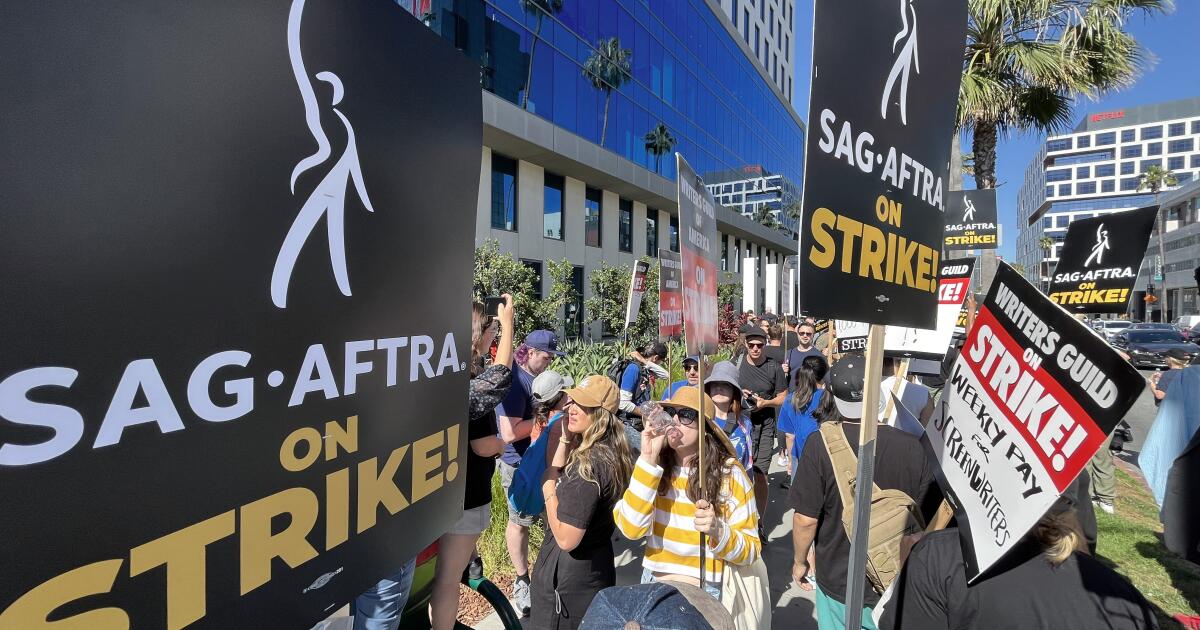
As Hollywood actors and writers continue to strike for better pay and benefits, California lawmakers are hoping to protect workers from being replaced by their digital clones.
On Wednesday, Assemblymember Ash Kalra (D-San José) is expected to introduce a bill that would give actors and artists a way to nullify provisions in vague contracts that allow studios and other companies to use artificial intelligence to digitally clone their voices, faces and bodies.
“There’s an increased concern that technology will be used to supplant their services,” Kalra said. “There’s no doubt that everyone has the right to control their own image and likeness as well as their voice.”
Artificial intelligence can generate images, sounds or even digital replicas, fueling concerns that film studios will use technology to wipe out entertainment jobs.
The use of what’s known as generative AI has been a sticking point in contract negotiations between striking actors and film studios. Labor unions such as SAG-AFTRA, which represents actors, voice-over artists and other entertainment workers, say more safeguards are needed to protect them from AI’s threat to their livlihoods even if they reach a favorable deal.
The bill, which was introduced days before the 2023 California legislative session wraps up on Thursday, is a sneak peek into how state lawmakers are hoping to protect workers from AI’s potential dangers. The legislation, Assembly Bill 459, won’t be considered by state lawmakers until next year. SAG-AFTRA, which has been on the picket lines with the Writer’s Guild of America, supports the legislation.
Bills to regulate AI, including to combat algorithmic discrimination, failed to advance this year at the state Capitol. With tech companies and Hollywood studios pivotal to California’s economy, politicians also are trying to balance concerns that government regulation could harm innovation. Gov. Gavin Newsom is treading cautiously on the issue and earlier this month issued an executive order directing state agencies to examine the benefits and risks of generative AI.
Under AB 459, actors, voice artists and other workers who signed away rights to their voice or likeness, allowing companies to make digital clones or use them in other generative AI applications, would be able to escape from those contracts if they weren’t represented by a labor union or lawyer. Contract provisions that don’t clearly define the potential uses of an AI-generated digital replica would be considered “unconscionable” under California law, which means it can’t be enforced.
“The speed with which these technologies have been adopted means the impact is not something that could happen one day in the future, but it is happening right now as studios seek to replace real people with digital scans,” Duncan Crabtree-Ireland, SAG-AFTRA’s national executive director and chief negotiator, said in a statement.
He added he was pleased to see the legislation “take on the unethical transfer of one’s image and likeness through exploitative Performer Agreements.”
The Alliance of Motion Picture and Television Producers, which represents the studios in labor negotiations, in the past stated that when it comes to screenwriting, AI raised “hard, important creative and legal questions for everyone.” In regards to acting, the AMPTP has called for informed consent and fair pay in cases where actors get digitally replicated.
Hollywood studios already use technology to scan the bodies and faces of actors so they can create digital replicas for scenes. James Earl Jones, who voiced Darth Vader in “Star Wars,” retired but reportedly allowed Disney and Lucasfilm to use AI and archival recordings to re-create his menacing and iconic voice.
But actors might also feel pressured to sign over rights to their voice or digital likeness or not fully understand a contract without a lawyer, Kalra said. Film extras who have had their bodies digitally copied also worry they’ll be replaced by their digital replicas. Meanwhile, entertainment companies continue to expand their AI operations.
Writers also have alleged that some tech companies are using their work to train AI systems without their consent. In July, comedian Sarah Silverman and novelists sued Facebook parent company Meta and OpenAI, who developed a popular generative AI tool ChatGPT, alleging that the tech companies used their copyrighted books to train AI systems.
As concerns about AI’s potential threat to the creative workforce continues to grow, Kalra said lawmakers need to act now.
“We have to get ahead of this and make sure we protect those who are struggling to get by, who might feel more compelled to sign on the dotted line,” he said.

As Hollywood actors and writers continue to strike for better pay and benefits, California lawmakers are hoping to protect workers from being replaced by their digital clones.
On Wednesday, Assemblymember Ash Kalra (D-San José) is expected to introduce a bill that would give actors and artists a way to nullify provisions in vague contracts that allow studios and other companies to use artificial intelligence to digitally clone their voices, faces and bodies.
“There’s an increased concern that technology will be used to supplant their services,” Kalra said. “There’s no doubt that everyone has the right to control their own image and likeness as well as their voice.”
Artificial intelligence can generate images, sounds or even digital replicas, fueling concerns that film studios will use technology to wipe out entertainment jobs.
The use of what’s known as generative AI has been a sticking point in contract negotiations between striking actors and film studios. Labor unions such as SAG-AFTRA, which represents actors, voice-over artists and other entertainment workers, say more safeguards are needed to protect them from AI’s threat to their livlihoods even if they reach a favorable deal.
The bill, which was introduced days before the 2023 California legislative session wraps up on Thursday, is a sneak peek into how state lawmakers are hoping to protect workers from AI’s potential dangers. The legislation, Assembly Bill 459, won’t be considered by state lawmakers until next year. SAG-AFTRA, which has been on the picket lines with the Writer’s Guild of America, supports the legislation.
Bills to regulate AI, including to combat algorithmic discrimination, failed to advance this year at the state Capitol. With tech companies and Hollywood studios pivotal to California’s economy, politicians also are trying to balance concerns that government regulation could harm innovation. Gov. Gavin Newsom is treading cautiously on the issue and earlier this month issued an executive order directing state agencies to examine the benefits and risks of generative AI.
Under AB 459, actors, voice artists and other workers who signed away rights to their voice or likeness, allowing companies to make digital clones or use them in other generative AI applications, would be able to escape from those contracts if they weren’t represented by a labor union or lawyer. Contract provisions that don’t clearly define the potential uses of an AI-generated digital replica would be considered “unconscionable” under California law, which means it can’t be enforced.
“The speed with which these technologies have been adopted means the impact is not something that could happen one day in the future, but it is happening right now as studios seek to replace real people with digital scans,” Duncan Crabtree-Ireland, SAG-AFTRA’s national executive director and chief negotiator, said in a statement.
He added he was pleased to see the legislation “take on the unethical transfer of one’s image and likeness through exploitative Performer Agreements.”
The Alliance of Motion Picture and Television Producers, which represents the studios in labor negotiations, in the past stated that when it comes to screenwriting, AI raised “hard, important creative and legal questions for everyone.” In regards to acting, the AMPTP has called for informed consent and fair pay in cases where actors get digitally replicated.
Hollywood studios already use technology to scan the bodies and faces of actors so they can create digital replicas for scenes. James Earl Jones, who voiced Darth Vader in “Star Wars,” retired but reportedly allowed Disney and Lucasfilm to use AI and archival recordings to re-create his menacing and iconic voice.
But actors might also feel pressured to sign over rights to their voice or digital likeness or not fully understand a contract without a lawyer, Kalra said. Film extras who have had their bodies digitally copied also worry they’ll be replaced by their digital replicas. Meanwhile, entertainment companies continue to expand their AI operations.
Writers also have alleged that some tech companies are using their work to train AI systems without their consent. In July, comedian Sarah Silverman and novelists sued Facebook parent company Meta and OpenAI, who developed a popular generative AI tool ChatGPT, alleging that the tech companies used their copyrighted books to train AI systems.
As concerns about AI’s potential threat to the creative workforce continues to grow, Kalra said lawmakers need to act now.
“We have to get ahead of this and make sure we protect those who are struggling to get by, who might feel more compelled to sign on the dotted line,” he said.

As Hollywood actors and writers continue to strike for better pay and benefits, California lawmakers are hoping to protect workers from being replaced by their digital clones.
On Wednesday, Assemblymember Ash Kalra (D-San José) is expected to introduce a bill that would give actors and artists a way to nullify provisions in vague contracts that allow studios and other companies to use artificial intelligence to digitally clone their voices, faces and bodies.
“There’s an increased concern that technology will be used to supplant their services,” Kalra said. “There’s no doubt that everyone has the right to control their own image and likeness as well as their voice.”
Artificial intelligence can generate images, sounds or even digital replicas, fueling concerns that film studios will use technology to wipe out entertainment jobs.
The use of what’s known as generative AI has been a sticking point in contract negotiations between striking actors and film studios. Labor unions such as SAG-AFTRA, which represents actors, voice-over artists and other entertainment workers, say more safeguards are needed to protect them from AI’s threat to their livlihoods even if they reach a favorable deal.
The bill, which was introduced days before the 2023 California legislative session wraps up on Thursday, is a sneak peek into how state lawmakers are hoping to protect workers from AI’s potential dangers. The legislation, Assembly Bill 459, won’t be considered by state lawmakers until next year. SAG-AFTRA, which has been on the picket lines with the Writer’s Guild of America, supports the legislation.
Bills to regulate AI, including to combat algorithmic discrimination, failed to advance this year at the state Capitol. With tech companies and Hollywood studios pivotal to California’s economy, politicians also are trying to balance concerns that government regulation could harm innovation. Gov. Gavin Newsom is treading cautiously on the issue and earlier this month issued an executive order directing state agencies to examine the benefits and risks of generative AI.
Under AB 459, actors, voice artists and other workers who signed away rights to their voice or likeness, allowing companies to make digital clones or use them in other generative AI applications, would be able to escape from those contracts if they weren’t represented by a labor union or lawyer. Contract provisions that don’t clearly define the potential uses of an AI-generated digital replica would be considered “unconscionable” under California law, which means it can’t be enforced.
“The speed with which these technologies have been adopted means the impact is not something that could happen one day in the future, but it is happening right now as studios seek to replace real people with digital scans,” Duncan Crabtree-Ireland, SAG-AFTRA’s national executive director and chief negotiator, said in a statement.
He added he was pleased to see the legislation “take on the unethical transfer of one’s image and likeness through exploitative Performer Agreements.”
The Alliance of Motion Picture and Television Producers, which represents the studios in labor negotiations, in the past stated that when it comes to screenwriting, AI raised “hard, important creative and legal questions for everyone.” In regards to acting, the AMPTP has called for informed consent and fair pay in cases where actors get digitally replicated.
Hollywood studios already use technology to scan the bodies and faces of actors so they can create digital replicas for scenes. James Earl Jones, who voiced Darth Vader in “Star Wars,” retired but reportedly allowed Disney and Lucasfilm to use AI and archival recordings to re-create his menacing and iconic voice.
But actors might also feel pressured to sign over rights to their voice or digital likeness or not fully understand a contract without a lawyer, Kalra said. Film extras who have had their bodies digitally copied also worry they’ll be replaced by their digital replicas. Meanwhile, entertainment companies continue to expand their AI operations.
Writers also have alleged that some tech companies are using their work to train AI systems without their consent. In July, comedian Sarah Silverman and novelists sued Facebook parent company Meta and OpenAI, who developed a popular generative AI tool ChatGPT, alleging that the tech companies used their copyrighted books to train AI systems.
As concerns about AI’s potential threat to the creative workforce continues to grow, Kalra said lawmakers need to act now.
“We have to get ahead of this and make sure we protect those who are struggling to get by, who might feel more compelled to sign on the dotted line,” he said.
As Hollywood actors and writers continue to strike for better pay and benefits, California lawmakers are hoping to protect workers from being replaced by their digital clones.
On Wednesday, Assemblymember Ash Kalra (D-San José) is expected to introduce a bill that would give actors and artists a way to nullify provisions in vague contracts that allow studios and other companies to use artificial intelligence to digitally clone their voices, faces and bodies.
“There’s an increased concern that technology will be used to supplant their services,” Kalra said. “There’s no doubt that everyone has the right to control their own image and likeness as well as their voice.”
Artificial intelligence can generate images, sounds or even digital replicas, fueling concerns that film studios will use technology to wipe out entertainment jobs.
The use of what’s known as generative AI has been a sticking point in contract negotiations between striking actors and film studios. Labor unions such as SAG-AFTRA, which represents actors, voice-over artists and other entertainment workers, say more safeguards are needed to protect them from AI’s threat to their livlihoods even if they reach a favorable deal.
The bill, which was introduced days before the 2023 California legislative session wraps up on Thursday, is a sneak peek into how state lawmakers are hoping to protect workers from AI’s potential dangers. The legislation, Assembly Bill 459, won’t be considered by state lawmakers until next year. SAG-AFTRA, which has been on the picket lines with the Writer’s Guild of America, supports the legislation.
Bills to regulate AI, including to combat algorithmic discrimination, failed to advance this year at the state Capitol. With tech companies and Hollywood studios pivotal to California’s economy, politicians also are trying to balance concerns that government regulation could harm innovation. Gov. Gavin Newsom is treading cautiously on the issue and earlier this month issued an executive order directing state agencies to examine the benefits and risks of generative AI.
Under AB 459, actors, voice artists and other workers who signed away rights to their voice or likeness, allowing companies to make digital clones or use them in other generative AI applications, would be able to escape from those contracts if they weren’t represented by a labor union or lawyer. Contract provisions that don’t clearly define the potential uses of an AI-generated digital replica would be considered “unconscionable” under California law, which means it can’t be enforced.
“The speed with which these technologies have been adopted means the impact is not something that could happen one day in the future, but it is happening right now as studios seek to replace real people with digital scans,” Duncan Crabtree-Ireland, SAG-AFTRA’s national executive director and chief negotiator, said in a statement.
He added he was pleased to see the legislation “take on the unethical transfer of one’s image and likeness through exploitative Performer Agreements.”
The Alliance of Motion Picture and Television Producers, which represents the studios in labor negotiations, in the past stated that when it comes to screenwriting, AI raised “hard, important creative and legal questions for everyone.” In regards to acting, the AMPTP has called for informed consent and fair pay in cases where actors get digitally replicated.
Hollywood studios already use technology to scan the bodies and faces of actors so they can create digital replicas for scenes. James Earl Jones, who voiced Darth Vader in “Star Wars,” retired but reportedly allowed Disney and Lucasfilm to use AI and archival recordings to re-create his menacing and iconic voice.
But actors might also feel pressured to sign over rights to their voice or digital likeness or not fully understand a contract without a lawyer, Kalra said. Film extras who have had their bodies digitally copied also worry they’ll be replaced by their digital replicas. Meanwhile, entertainment companies continue to expand their AI operations.
Writers also have alleged that some tech companies are using their work to train AI systems without their consent. In July, comedian Sarah Silverman and novelists sued Facebook parent company Meta and OpenAI, who developed a popular generative AI tool ChatGPT, alleging that the tech companies used their copyrighted books to train AI systems.
As concerns about AI’s potential threat to the creative workforce continues to grow, Kalra said lawmakers need to act now.
“We have to get ahead of this and make sure we protect those who are struggling to get by, who might feel more compelled to sign on the dotted line,” he said.

As Hollywood actors and writers continue to strike for better pay and benefits, California lawmakers are hoping to protect workers from being replaced by their digital clones.
On Wednesday, Assemblymember Ash Kalra (D-San José) is expected to introduce a bill that would give actors and artists a way to nullify provisions in vague contracts that allow studios and other companies to use artificial intelligence to digitally clone their voices, faces and bodies.
“There’s an increased concern that technology will be used to supplant their services,” Kalra said. “There’s no doubt that everyone has the right to control their own image and likeness as well as their voice.”
Artificial intelligence can generate images, sounds or even digital replicas, fueling concerns that film studios will use technology to wipe out entertainment jobs.
The use of what’s known as generative AI has been a sticking point in contract negotiations between striking actors and film studios. Labor unions such as SAG-AFTRA, which represents actors, voice-over artists and other entertainment workers, say more safeguards are needed to protect them from AI’s threat to their livlihoods even if they reach a favorable deal.
The bill, which was introduced days before the 2023 California legislative session wraps up on Thursday, is a sneak peek into how state lawmakers are hoping to protect workers from AI’s potential dangers. The legislation, Assembly Bill 459, won’t be considered by state lawmakers until next year. SAG-AFTRA, which has been on the picket lines with the Writer’s Guild of America, supports the legislation.
Bills to regulate AI, including to combat algorithmic discrimination, failed to advance this year at the state Capitol. With tech companies and Hollywood studios pivotal to California’s economy, politicians also are trying to balance concerns that government regulation could harm innovation. Gov. Gavin Newsom is treading cautiously on the issue and earlier this month issued an executive order directing state agencies to examine the benefits and risks of generative AI.
Under AB 459, actors, voice artists and other workers who signed away rights to their voice or likeness, allowing companies to make digital clones or use them in other generative AI applications, would be able to escape from those contracts if they weren’t represented by a labor union or lawyer. Contract provisions that don’t clearly define the potential uses of an AI-generated digital replica would be considered “unconscionable” under California law, which means it can’t be enforced.
“The speed with which these technologies have been adopted means the impact is not something that could happen one day in the future, but it is happening right now as studios seek to replace real people with digital scans,” Duncan Crabtree-Ireland, SAG-AFTRA’s national executive director and chief negotiator, said in a statement.
He added he was pleased to see the legislation “take on the unethical transfer of one’s image and likeness through exploitative Performer Agreements.”
The Alliance of Motion Picture and Television Producers, which represents the studios in labor negotiations, in the past stated that when it comes to screenwriting, AI raised “hard, important creative and legal questions for everyone.” In regards to acting, the AMPTP has called for informed consent and fair pay in cases where actors get digitally replicated.
Hollywood studios already use technology to scan the bodies and faces of actors so they can create digital replicas for scenes. James Earl Jones, who voiced Darth Vader in “Star Wars,” retired but reportedly allowed Disney and Lucasfilm to use AI and archival recordings to re-create his menacing and iconic voice.
But actors might also feel pressured to sign over rights to their voice or digital likeness or not fully understand a contract without a lawyer, Kalra said. Film extras who have had their bodies digitally copied also worry they’ll be replaced by their digital replicas. Meanwhile, entertainment companies continue to expand their AI operations.
Writers also have alleged that some tech companies are using their work to train AI systems without their consent. In July, comedian Sarah Silverman and novelists sued Facebook parent company Meta and OpenAI, who developed a popular generative AI tool ChatGPT, alleging that the tech companies used their copyrighted books to train AI systems.
As concerns about AI’s potential threat to the creative workforce continues to grow, Kalra said lawmakers need to act now.
“We have to get ahead of this and make sure we protect those who are struggling to get by, who might feel more compelled to sign on the dotted line,” he said.
As Hollywood actors and writers continue to strike for better pay and benefits, California lawmakers are hoping to protect workers from being replaced by their digital clones.
On Wednesday, Assemblymember Ash Kalra (D-San José) is expected to introduce a bill that would give actors and artists a way to nullify provisions in vague contracts that allow studios and other companies to use artificial intelligence to digitally clone their voices, faces and bodies.
“There’s an increased concern that technology will be used to supplant their services,” Kalra said. “There’s no doubt that everyone has the right to control their own image and likeness as well as their voice.”
Artificial intelligence can generate images, sounds or even digital replicas, fueling concerns that film studios will use technology to wipe out entertainment jobs.
The use of what’s known as generative AI has been a sticking point in contract negotiations between striking actors and film studios. Labor unions such as SAG-AFTRA, which represents actors, voice-over artists and other entertainment workers, say more safeguards are needed to protect them from AI’s threat to their livlihoods even if they reach a favorable deal.
The bill, which was introduced days before the 2023 California legislative session wraps up on Thursday, is a sneak peek into how state lawmakers are hoping to protect workers from AI’s potential dangers. The legislation, Assembly Bill 459, won’t be considered by state lawmakers until next year. SAG-AFTRA, which has been on the picket lines with the Writer’s Guild of America, supports the legislation.
Bills to regulate AI, including to combat algorithmic discrimination, failed to advance this year at the state Capitol. With tech companies and Hollywood studios pivotal to California’s economy, politicians also are trying to balance concerns that government regulation could harm innovation. Gov. Gavin Newsom is treading cautiously on the issue and earlier this month issued an executive order directing state agencies to examine the benefits and risks of generative AI.
Under AB 459, actors, voice artists and other workers who signed away rights to their voice or likeness, allowing companies to make digital clones or use them in other generative AI applications, would be able to escape from those contracts if they weren’t represented by a labor union or lawyer. Contract provisions that don’t clearly define the potential uses of an AI-generated digital replica would be considered “unconscionable” under California law, which means it can’t be enforced.
“The speed with which these technologies have been adopted means the impact is not something that could happen one day in the future, but it is happening right now as studios seek to replace real people with digital scans,” Duncan Crabtree-Ireland, SAG-AFTRA’s national executive director and chief negotiator, said in a statement.
He added he was pleased to see the legislation “take on the unethical transfer of one’s image and likeness through exploitative Performer Agreements.”
The Alliance of Motion Picture and Television Producers, which represents the studios in labor negotiations, in the past stated that when it comes to screenwriting, AI raised “hard, important creative and legal questions for everyone.” In regards to acting, the AMPTP has called for informed consent and fair pay in cases where actors get digitally replicated.
Hollywood studios already use technology to scan the bodies and faces of actors so they can create digital replicas for scenes. James Earl Jones, who voiced Darth Vader in “Star Wars,” retired but reportedly allowed Disney and Lucasfilm to use AI and archival recordings to re-create his menacing and iconic voice.
But actors might also feel pressured to sign over rights to their voice or digital likeness or not fully understand a contract without a lawyer, Kalra said. Film extras who have had their bodies digitally copied also worry they’ll be replaced by their digital replicas. Meanwhile, entertainment companies continue to expand their AI operations.
Writers also have alleged that some tech companies are using their work to train AI systems without their consent. In July, comedian Sarah Silverman and novelists sued Facebook parent company Meta and OpenAI, who developed a popular generative AI tool ChatGPT, alleging that the tech companies used their copyrighted books to train AI systems.
As concerns about AI’s potential threat to the creative workforce continues to grow, Kalra said lawmakers need to act now.
“We have to get ahead of this and make sure we protect those who are struggling to get by, who might feel more compelled to sign on the dotted line,” he said.
As Hollywood actors and writers continue to strike for better pay and benefits, California lawmakers are hoping to protect workers from being replaced by their digital clones.
On Wednesday, Assemblymember Ash Kalra (D-San José) is expected to introduce a bill that would give actors and artists a way to nullify provisions in vague contracts that allow studios and other companies to use artificial intelligence to digitally clone their voices, faces and bodies.
“There’s an increased concern that technology will be used to supplant their services,” Kalra said. “There’s no doubt that everyone has the right to control their own image and likeness as well as their voice.”
Artificial intelligence can generate images, sounds or even digital replicas, fueling concerns that film studios will use technology to wipe out entertainment jobs.
The use of what’s known as generative AI has been a sticking point in contract negotiations between striking actors and film studios. Labor unions such as SAG-AFTRA, which represents actors, voice-over artists and other entertainment workers, say more safeguards are needed to protect them from AI’s threat to their livlihoods even if they reach a favorable deal.
The bill, which was introduced days before the 2023 California legislative session wraps up on Thursday, is a sneak peek into how state lawmakers are hoping to protect workers from AI’s potential dangers. The legislation, Assembly Bill 459, won’t be considered by state lawmakers until next year. SAG-AFTRA, which has been on the picket lines with the Writer’s Guild of America, supports the legislation.
Bills to regulate AI, including to combat algorithmic discrimination, failed to advance this year at the state Capitol. With tech companies and Hollywood studios pivotal to California’s economy, politicians also are trying to balance concerns that government regulation could harm innovation. Gov. Gavin Newsom is treading cautiously on the issue and earlier this month issued an executive order directing state agencies to examine the benefits and risks of generative AI.
Under AB 459, actors, voice artists and other workers who signed away rights to their voice or likeness, allowing companies to make digital clones or use them in other generative AI applications, would be able to escape from those contracts if they weren’t represented by a labor union or lawyer. Contract provisions that don’t clearly define the potential uses of an AI-generated digital replica would be considered “unconscionable” under California law, which means it can’t be enforced.
“The speed with which these technologies have been adopted means the impact is not something that could happen one day in the future, but it is happening right now as studios seek to replace real people with digital scans,” Duncan Crabtree-Ireland, SAG-AFTRA’s national executive director and chief negotiator, said in a statement.
He added he was pleased to see the legislation “take on the unethical transfer of one’s image and likeness through exploitative Performer Agreements.”
The Alliance of Motion Picture and Television Producers, which represents the studios in labor negotiations, in the past stated that when it comes to screenwriting, AI raised “hard, important creative and legal questions for everyone.” In regards to acting, the AMPTP has called for informed consent and fair pay in cases where actors get digitally replicated.
Hollywood studios already use technology to scan the bodies and faces of actors so they can create digital replicas for scenes. James Earl Jones, who voiced Darth Vader in “Star Wars,” retired but reportedly allowed Disney and Lucasfilm to use AI and archival recordings to re-create his menacing and iconic voice.
But actors might also feel pressured to sign over rights to their voice or digital likeness or not fully understand a contract without a lawyer, Kalra said. Film extras who have had their bodies digitally copied also worry they’ll be replaced by their digital replicas. Meanwhile, entertainment companies continue to expand their AI operations.
Writers also have alleged that some tech companies are using their work to train AI systems without their consent. In July, comedian Sarah Silverman and novelists sued Facebook parent company Meta and OpenAI, who developed a popular generative AI tool ChatGPT, alleging that the tech companies used their copyrighted books to train AI systems.
As concerns about AI’s potential threat to the creative workforce continues to grow, Kalra said lawmakers need to act now.
“We have to get ahead of this and make sure we protect those who are struggling to get by, who might feel more compelled to sign on the dotted line,” he said.
As Hollywood actors and writers continue to strike for better pay and benefits, California lawmakers are hoping to protect workers from being replaced by their digital clones.
On Wednesday, Assemblymember Ash Kalra (D-San José) is expected to introduce a bill that would give actors and artists a way to nullify provisions in vague contracts that allow studios and other companies to use artificial intelligence to digitally clone their voices, faces and bodies.
“There’s an increased concern that technology will be used to supplant their services,” Kalra said. “There’s no doubt that everyone has the right to control their own image and likeness as well as their voice.”
Artificial intelligence can generate images, sounds or even digital replicas, fueling concerns that film studios will use technology to wipe out entertainment jobs.
The use of what’s known as generative AI has been a sticking point in contract negotiations between striking actors and film studios. Labor unions such as SAG-AFTRA, which represents actors, voice-over artists and other entertainment workers, say more safeguards are needed to protect them from AI’s threat to their livlihoods even if they reach a favorable deal.
The bill, which was introduced days before the 2023 California legislative session wraps up on Thursday, is a sneak peek into how state lawmakers are hoping to protect workers from AI’s potential dangers. The legislation, Assembly Bill 459, won’t be considered by state lawmakers until next year. SAG-AFTRA, which has been on the picket lines with the Writer’s Guild of America, supports the legislation.
Bills to regulate AI, including to combat algorithmic discrimination, failed to advance this year at the state Capitol. With tech companies and Hollywood studios pivotal to California’s economy, politicians also are trying to balance concerns that government regulation could harm innovation. Gov. Gavin Newsom is treading cautiously on the issue and earlier this month issued an executive order directing state agencies to examine the benefits and risks of generative AI.
Under AB 459, actors, voice artists and other workers who signed away rights to their voice or likeness, allowing companies to make digital clones or use them in other generative AI applications, would be able to escape from those contracts if they weren’t represented by a labor union or lawyer. Contract provisions that don’t clearly define the potential uses of an AI-generated digital replica would be considered “unconscionable” under California law, which means it can’t be enforced.
“The speed with which these technologies have been adopted means the impact is not something that could happen one day in the future, but it is happening right now as studios seek to replace real people with digital scans,” Duncan Crabtree-Ireland, SAG-AFTRA’s national executive director and chief negotiator, said in a statement.
He added he was pleased to see the legislation “take on the unethical transfer of one’s image and likeness through exploitative Performer Agreements.”
The Alliance of Motion Picture and Television Producers, which represents the studios in labor negotiations, in the past stated that when it comes to screenwriting, AI raised “hard, important creative and legal questions for everyone.” In regards to acting, the AMPTP has called for informed consent and fair pay in cases where actors get digitally replicated.
Hollywood studios already use technology to scan the bodies and faces of actors so they can create digital replicas for scenes. James Earl Jones, who voiced Darth Vader in “Star Wars,” retired but reportedly allowed Disney and Lucasfilm to use AI and archival recordings to re-create his menacing and iconic voice.
But actors might also feel pressured to sign over rights to their voice or digital likeness or not fully understand a contract without a lawyer, Kalra said. Film extras who have had their bodies digitally copied also worry they’ll be replaced by their digital replicas. Meanwhile, entertainment companies continue to expand their AI operations.
Writers also have alleged that some tech companies are using their work to train AI systems without their consent. In July, comedian Sarah Silverman and novelists sued Facebook parent company Meta and OpenAI, who developed a popular generative AI tool ChatGPT, alleging that the tech companies used their copyrighted books to train AI systems.
As concerns about AI’s potential threat to the creative workforce continues to grow, Kalra said lawmakers need to act now.
“We have to get ahead of this and make sure we protect those who are struggling to get by, who might feel more compelled to sign on the dotted line,” he said.