
Tuesday, April 21, 2026
Washington DC
New York
Toronto
Distribution: (800) 510 9863
Press ID
  • Login
RH NEWSROOM National News and Press Releases. Local and Regional Perspectives. Media Advisories.
Yonkers Observer
  • Home
  • World
  • Politics
  • Finance
  • Technology
  • Health
  • Culture
  • Entertainment
  • Trend
No Result
View All Result
  • Home
  • World
  • Politics
  • Finance
  • Technology
  • Health
  • Culture
  • Entertainment
  • Trend
No Result
View All Result
Yonkers Observer
No Result
View All Result
Home Culture

Percival Everrett talks about new fall novel “Dr. No”

by Yonkers Observer Report
August 29, 2022
in Culture, Entertainment
Share on FacebookShare on Twitter

Fall Preview Books

Dr. No

By Percival Everett
Graywolf: 232 pages, $16

If you buy books linked on our site, The Times may earn a commission from Bookshop.org, whose fees support independent bookstores.

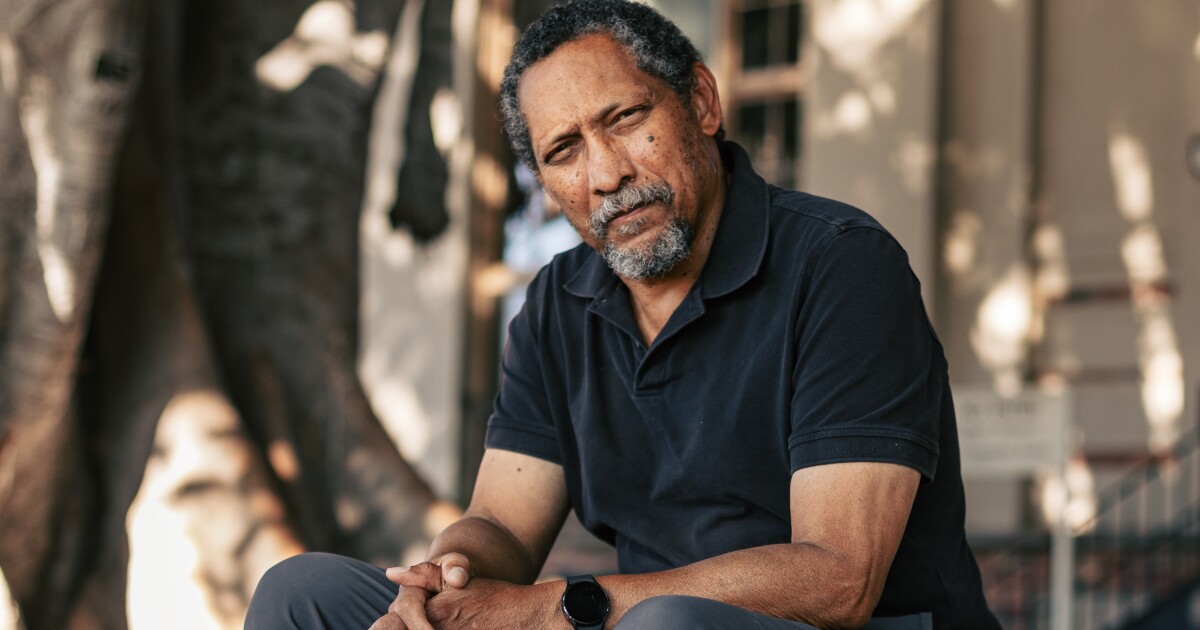
Percival Everett writes novels that play with genre, with language and with our culture’s assumptions about race and gender. But for his novel “Dr. No,” coming in November from Graywolf Press, Everett wrote about nothing.

The latest from the USC English professor and Guggenheim fellow is another cross-genre hybrid featuring a cast of characters out of a 007 novel: John Milton Bradley Sill, a billionaire who wants to be a Bond supervillain; a mathematician named Wala Kitu whose specialty is the concept of “nothing”; and a young woman who is both a genius and a sex object. All become entangled in Sill’s desire to own what’s inside Fort Knox, with a subplot involving the assassination of Martin Luther King Jr.

Everett spoke with The Times in August via Zoom about lots of things, but mostly nothing.

In “Dr. No,” Sill wants to possess everything, while Wala Kitu (whose two names translate as nothing) specializes in nothing. “Zero” is a mental concept that cannot be demonstrated in real life. How did you conceive of a nothing you could write about?

I started with nothing. [Laughs.] Nothing has been a fascinating concept for the longest time. The West refused to have the number zero because it undercut the notion of God: You cannot have nothing because of the prime mover. But in the Near East and in the Arab world, nothing allowed all sorts of tabulations. So in that highly religious way, when you realize that something was really useful, you modify your religion.

I love arithmetic; it’s fascinating to me. I wish I were a mathematician. I would be if I were smart enough to understand a lot of the stuff I read, but I come away with nothing.

Which came first: the idea of nothing or the desire to write a caper?

I honestly don’t know. It’s certainly the case that whenever I finish a novel, I forget it immediately. Actually, the birth of the novel had nothing to do with the novel we ended up with. It was actually my thinking: What would happen if the character from my novel ‘Glyph’ grew up?” At the beginning [Wala Kitu] identifies himself as Ralph Townsend [the toddler-prodigy narrator of “Glyph”]. That’s where it started for me.

Sill believes he can use his money to possess nothing but instead creates negative space. Wala Kitu seems to understand that nothing is actually neutral — stasis. Do I have this right? In your view, does nothing have a value?

The novel, though about nothing, is actually about finding something in the nihilistic existence. For the characters, we could perhaps say that their pursuit of nothing is a response to a materialistic world that offers many somethings that finally don’t amount to much and are not satisfying. Of course, this is all bull— and really adds up to nothing. Does that help? I can’t go on, as I have nothing left. At least, there’s that.

Fall Preview Books

Dr. No

By Percival Everett
Graywolf: 232 pages, $16

If you buy books linked on our site, The Times may earn a commission from Bookshop.org, whose fees support independent bookstores.

Percival Everett writes novels that play with genre, with language and with our culture’s assumptions about race and gender. But for his novel “Dr. No,” coming in November from Graywolf Press, Everett wrote about nothing.

The latest from the USC English professor and Guggenheim fellow is another cross-genre hybrid featuring a cast of characters out of a 007 novel: John Milton Bradley Sill, a billionaire who wants to be a Bond supervillain; a mathematician named Wala Kitu whose specialty is the concept of “nothing”; and a young woman who is both a genius and a sex object. All become entangled in Sill’s desire to own what’s inside Fort Knox, with a subplot involving the assassination of Martin Luther King Jr.

Everett spoke with The Times in August via Zoom about lots of things, but mostly nothing.

In “Dr. No,” Sill wants to possess everything, while Wala Kitu (whose two names translate as nothing) specializes in nothing. “Zero” is a mental concept that cannot be demonstrated in real life. How did you conceive of a nothing you could write about?

I started with nothing. [Laughs.] Nothing has been a fascinating concept for the longest time. The West refused to have the number zero because it undercut the notion of God: You cannot have nothing because of the prime mover. But in the Near East and in the Arab world, nothing allowed all sorts of tabulations. So in that highly religious way, when you realize that something was really useful, you modify your religion.

I love arithmetic; it’s fascinating to me. I wish I were a mathematician. I would be if I were smart enough to understand a lot of the stuff I read, but I come away with nothing.

Which came first: the idea of nothing or the desire to write a caper?

I honestly don’t know. It’s certainly the case that whenever I finish a novel, I forget it immediately. Actually, the birth of the novel had nothing to do with the novel we ended up with. It was actually my thinking: What would happen if the character from my novel ‘Glyph’ grew up?” At the beginning [Wala Kitu] identifies himself as Ralph Townsend [the toddler-prodigy narrator of “Glyph”]. That’s where it started for me.

Sill believes he can use his money to possess nothing but instead creates negative space. Wala Kitu seems to understand that nothing is actually neutral — stasis. Do I have this right? In your view, does nothing have a value?

The novel, though about nothing, is actually about finding something in the nihilistic existence. For the characters, we could perhaps say that their pursuit of nothing is a response to a materialistic world that offers many somethings that finally don’t amount to much and are not satisfying. Of course, this is all bull— and really adds up to nothing. Does that help? I can’t go on, as I have nothing left. At least, there’s that.

Fall Preview Books

Dr. No

By Percival Everett
Graywolf: 232 pages, $16

If you buy books linked on our site, The Times may earn a commission from Bookshop.org, whose fees support independent bookstores.

Percival Everett writes novels that play with genre, with language and with our culture’s assumptions about race and gender. But for his novel “Dr. No,” coming in November from Graywolf Press, Everett wrote about nothing.

The latest from the USC English professor and Guggenheim fellow is another cross-genre hybrid featuring a cast of characters out of a 007 novel: John Milton Bradley Sill, a billionaire who wants to be a Bond supervillain; a mathematician named Wala Kitu whose specialty is the concept of “nothing”; and a young woman who is both a genius and a sex object. All become entangled in Sill’s desire to own what’s inside Fort Knox, with a subplot involving the assassination of Martin Luther King Jr.

Everett spoke with The Times in August via Zoom about lots of things, but mostly nothing.

In “Dr. No,” Sill wants to possess everything, while Wala Kitu (whose two names translate as nothing) specializes in nothing. “Zero” is a mental concept that cannot be demonstrated in real life. How did you conceive of a nothing you could write about?

I started with nothing. [Laughs.] Nothing has been a fascinating concept for the longest time. The West refused to have the number zero because it undercut the notion of God: You cannot have nothing because of the prime mover. But in the Near East and in the Arab world, nothing allowed all sorts of tabulations. So in that highly religious way, when you realize that something was really useful, you modify your religion.

I love arithmetic; it’s fascinating to me. I wish I were a mathematician. I would be if I were smart enough to understand a lot of the stuff I read, but I come away with nothing.

Which came first: the idea of nothing or the desire to write a caper?

I honestly don’t know. It’s certainly the case that whenever I finish a novel, I forget it immediately. Actually, the birth of the novel had nothing to do with the novel we ended up with. It was actually my thinking: What would happen if the character from my novel ‘Glyph’ grew up?” At the beginning [Wala Kitu] identifies himself as Ralph Townsend [the toddler-prodigy narrator of “Glyph”]. That’s where it started for me.

Sill believes he can use his money to possess nothing but instead creates negative space. Wala Kitu seems to understand that nothing is actually neutral — stasis. Do I have this right? In your view, does nothing have a value?

The novel, though about nothing, is actually about finding something in the nihilistic existence. For the characters, we could perhaps say that their pursuit of nothing is a response to a materialistic world that offers many somethings that finally don’t amount to much and are not satisfying. Of course, this is all bull— and really adds up to nothing. Does that help? I can’t go on, as I have nothing left. At least, there’s that.

Fall Preview Books

Dr. No

By Percival Everett
Graywolf: 232 pages, $16

If you buy books linked on our site, The Times may earn a commission from Bookshop.org, whose fees support independent bookstores.

Percival Everett writes novels that play with genre, with language and with our culture’s assumptions about race and gender. But for his novel “Dr. No,” coming in November from Graywolf Press, Everett wrote about nothing.

The latest from the USC English professor and Guggenheim fellow is another cross-genre hybrid featuring a cast of characters out of a 007 novel: John Milton Bradley Sill, a billionaire who wants to be a Bond supervillain; a mathematician named Wala Kitu whose specialty is the concept of “nothing”; and a young woman who is both a genius and a sex object. All become entangled in Sill’s desire to own what’s inside Fort Knox, with a subplot involving the assassination of Martin Luther King Jr.

Everett spoke with The Times in August via Zoom about lots of things, but mostly nothing.

In “Dr. No,” Sill wants to possess everything, while Wala Kitu (whose two names translate as nothing) specializes in nothing. “Zero” is a mental concept that cannot be demonstrated in real life. How did you conceive of a nothing you could write about?

I started with nothing. [Laughs.] Nothing has been a fascinating concept for the longest time. The West refused to have the number zero because it undercut the notion of God: You cannot have nothing because of the prime mover. But in the Near East and in the Arab world, nothing allowed all sorts of tabulations. So in that highly religious way, when you realize that something was really useful, you modify your religion.

I love arithmetic; it’s fascinating to me. I wish I were a mathematician. I would be if I were smart enough to understand a lot of the stuff I read, but I come away with nothing.

Which came first: the idea of nothing or the desire to write a caper?

I honestly don’t know. It’s certainly the case that whenever I finish a novel, I forget it immediately. Actually, the birth of the novel had nothing to do with the novel we ended up with. It was actually my thinking: What would happen if the character from my novel ‘Glyph’ grew up?” At the beginning [Wala Kitu] identifies himself as Ralph Townsend [the toddler-prodigy narrator of “Glyph”]. That’s where it started for me.

Sill believes he can use his money to possess nothing but instead creates negative space. Wala Kitu seems to understand that nothing is actually neutral — stasis. Do I have this right? In your view, does nothing have a value?

The novel, though about nothing, is actually about finding something in the nihilistic existence. For the characters, we could perhaps say that their pursuit of nothing is a response to a materialistic world that offers many somethings that finally don’t amount to much and are not satisfying. Of course, this is all bull— and really adds up to nothing. Does that help? I can’t go on, as I have nothing left. At least, there’s that.
Fall Preview Books

Dr. No

By Percival Everett
Graywolf: 232 pages, $16

If you buy books linked on our site, The Times may earn a commission from Bookshop.org, whose fees support independent bookstores.

Percival Everett writes novels that play with genre, with language and with our culture’s assumptions about race and gender. But for his novel “Dr. No,” coming in November from Graywolf Press, Everett wrote about nothing.

The latest from the USC English professor and Guggenheim fellow is another cross-genre hybrid featuring a cast of characters out of a 007 novel: John Milton Bradley Sill, a billionaire who wants to be a Bond supervillain; a mathematician named Wala Kitu whose specialty is the concept of “nothing”; and a young woman who is both a genius and a sex object. All become entangled in Sill’s desire to own what’s inside Fort Knox, with a subplot involving the assassination of Martin Luther King Jr.

Everett spoke with The Times in August via Zoom about lots of things, but mostly nothing.

In “Dr. No,” Sill wants to possess everything, while Wala Kitu (whose two names translate as nothing) specializes in nothing. “Zero” is a mental concept that cannot be demonstrated in real life. How did you conceive of a nothing you could write about?

I started with nothing. [Laughs.] Nothing has been a fascinating concept for the longest time. The West refused to have the number zero because it undercut the notion of God: You cannot have nothing because of the prime mover. But in the Near East and in the Arab world, nothing allowed all sorts of tabulations. So in that highly religious way, when you realize that something was really useful, you modify your religion.

I love arithmetic; it’s fascinating to me. I wish I were a mathematician. I would be if I were smart enough to understand a lot of the stuff I read, but I come away with nothing.

Which came first: the idea of nothing or the desire to write a caper?

I honestly don’t know. It’s certainly the case that whenever I finish a novel, I forget it immediately. Actually, the birth of the novel had nothing to do with the novel we ended up with. It was actually my thinking: What would happen if the character from my novel ‘Glyph’ grew up?” At the beginning [Wala Kitu] identifies himself as Ralph Townsend [the toddler-prodigy narrator of “Glyph”]. That’s where it started for me.

Sill believes he can use his money to possess nothing but instead creates negative space. Wala Kitu seems to understand that nothing is actually neutral — stasis. Do I have this right? In your view, does nothing have a value?

The novel, though about nothing, is actually about finding something in the nihilistic existence. For the characters, we could perhaps say that their pursuit of nothing is a response to a materialistic world that offers many somethings that finally don’t amount to much and are not satisfying. Of course, this is all bull— and really adds up to nothing. Does that help? I can’t go on, as I have nothing left. At least, there’s that.
Fall Preview Books

Dr. No

By Percival Everett
Graywolf: 232 pages, $16

If you buy books linked on our site, The Times may earn a commission from Bookshop.org, whose fees support independent bookstores.

Percival Everett writes novels that play with genre, with language and with our culture’s assumptions about race and gender. But for his novel “Dr. No,” coming in November from Graywolf Press, Everett wrote about nothing.

The latest from the USC English professor and Guggenheim fellow is another cross-genre hybrid featuring a cast of characters out of a 007 novel: John Milton Bradley Sill, a billionaire who wants to be a Bond supervillain; a mathematician named Wala Kitu whose specialty is the concept of “nothing”; and a young woman who is both a genius and a sex object. All become entangled in Sill’s desire to own what’s inside Fort Knox, with a subplot involving the assassination of Martin Luther King Jr.

Everett spoke with The Times in August via Zoom about lots of things, but mostly nothing.

In “Dr. No,” Sill wants to possess everything, while Wala Kitu (whose two names translate as nothing) specializes in nothing. “Zero” is a mental concept that cannot be demonstrated in real life. How did you conceive of a nothing you could write about?

I started with nothing. [Laughs.] Nothing has been a fascinating concept for the longest time. The West refused to have the number zero because it undercut the notion of God: You cannot have nothing because of the prime mover. But in the Near East and in the Arab world, nothing allowed all sorts of tabulations. So in that highly religious way, when you realize that something was really useful, you modify your religion.

I love arithmetic; it’s fascinating to me. I wish I were a mathematician. I would be if I were smart enough to understand a lot of the stuff I read, but I come away with nothing.

Which came first: the idea of nothing or the desire to write a caper?

I honestly don’t know. It’s certainly the case that whenever I finish a novel, I forget it immediately. Actually, the birth of the novel had nothing to do with the novel we ended up with. It was actually my thinking: What would happen if the character from my novel ‘Glyph’ grew up?” At the beginning [Wala Kitu] identifies himself as Ralph Townsend [the toddler-prodigy narrator of “Glyph”]. That’s where it started for me.

Sill believes he can use his money to possess nothing but instead creates negative space. Wala Kitu seems to understand that nothing is actually neutral — stasis. Do I have this right? In your view, does nothing have a value?

The novel, though about nothing, is actually about finding something in the nihilistic existence. For the characters, we could perhaps say that their pursuit of nothing is a response to a materialistic world that offers many somethings that finally don’t amount to much and are not satisfying. Of course, this is all bull— and really adds up to nothing. Does that help? I can’t go on, as I have nothing left. At least, there’s that.

Fall Preview Books

Dr. No

By Percival Everett
Graywolf: 232 pages, $16

If you buy books linked on our site, The Times may earn a commission from Bookshop.org, whose fees support independent bookstores.

Percival Everett writes novels that play with genre, with language and with our culture’s assumptions about race and gender. But for his novel “Dr. No,” coming in November from Graywolf Press, Everett wrote about nothing.

The latest from the USC English professor and Guggenheim fellow is another cross-genre hybrid featuring a cast of characters out of a 007 novel: John Milton Bradley Sill, a billionaire who wants to be a Bond supervillain; a mathematician named Wala Kitu whose specialty is the concept of “nothing”; and a young woman who is both a genius and a sex object. All become entangled in Sill’s desire to own what’s inside Fort Knox, with a subplot involving the assassination of Martin Luther King Jr.

Everett spoke with The Times in August via Zoom about lots of things, but mostly nothing.

In “Dr. No,” Sill wants to possess everything, while Wala Kitu (whose two names translate as nothing) specializes in nothing. “Zero” is a mental concept that cannot be demonstrated in real life. How did you conceive of a nothing you could write about?

I started with nothing. [Laughs.] Nothing has been a fascinating concept for the longest time. The West refused to have the number zero because it undercut the notion of God: You cannot have nothing because of the prime mover. But in the Near East and in the Arab world, nothing allowed all sorts of tabulations. So in that highly religious way, when you realize that something was really useful, you modify your religion.

I love arithmetic; it’s fascinating to me. I wish I were a mathematician. I would be if I were smart enough to understand a lot of the stuff I read, but I come away with nothing.

Which came first: the idea of nothing or the desire to write a caper?

I honestly don’t know. It’s certainly the case that whenever I finish a novel, I forget it immediately. Actually, the birth of the novel had nothing to do with the novel we ended up with. It was actually my thinking: What would happen if the character from my novel ‘Glyph’ grew up?” At the beginning [Wala Kitu] identifies himself as Ralph Townsend [the toddler-prodigy narrator of “Glyph”]. That’s where it started for me.

Sill believes he can use his money to possess nothing but instead creates negative space. Wala Kitu seems to understand that nothing is actually neutral — stasis. Do I have this right? In your view, does nothing have a value?

The novel, though about nothing, is actually about finding something in the nihilistic existence. For the characters, we could perhaps say that their pursuit of nothing is a response to a materialistic world that offers many somethings that finally don’t amount to much and are not satisfying. Of course, this is all bull— and really adds up to nothing. Does that help? I can’t go on, as I have nothing left. At least, there’s that.

Fall Preview Books

Dr. No

By Percival Everett
Graywolf: 232 pages, $16

If you buy books linked on our site, The Times may earn a commission from Bookshop.org, whose fees support independent bookstores.

Percival Everett writes novels that play with genre, with language and with our culture’s assumptions about race and gender. But for his novel “Dr. No,” coming in November from Graywolf Press, Everett wrote about nothing.

The latest from the USC English professor and Guggenheim fellow is another cross-genre hybrid featuring a cast of characters out of a 007 novel: John Milton Bradley Sill, a billionaire who wants to be a Bond supervillain; a mathematician named Wala Kitu whose specialty is the concept of “nothing”; and a young woman who is both a genius and a sex object. All become entangled in Sill’s desire to own what’s inside Fort Knox, with a subplot involving the assassination of Martin Luther King Jr.

Everett spoke with The Times in August via Zoom about lots of things, but mostly nothing.

In “Dr. No,” Sill wants to possess everything, while Wala Kitu (whose two names translate as nothing) specializes in nothing. “Zero” is a mental concept that cannot be demonstrated in real life. How did you conceive of a nothing you could write about?

I started with nothing. [Laughs.] Nothing has been a fascinating concept for the longest time. The West refused to have the number zero because it undercut the notion of God: You cannot have nothing because of the prime mover. But in the Near East and in the Arab world, nothing allowed all sorts of tabulations. So in that highly religious way, when you realize that something was really useful, you modify your religion.

I love arithmetic; it’s fascinating to me. I wish I were a mathematician. I would be if I were smart enough to understand a lot of the stuff I read, but I come away with nothing.

Which came first: the idea of nothing or the desire to write a caper?

I honestly don’t know. It’s certainly the case that whenever I finish a novel, I forget it immediately. Actually, the birth of the novel had nothing to do with the novel we ended up with. It was actually my thinking: What would happen if the character from my novel ‘Glyph’ grew up?” At the beginning [Wala Kitu] identifies himself as Ralph Townsend [the toddler-prodigy narrator of “Glyph”]. That’s where it started for me.

Sill believes he can use his money to possess nothing but instead creates negative space. Wala Kitu seems to understand that nothing is actually neutral — stasis. Do I have this right? In your view, does nothing have a value?

The novel, though about nothing, is actually about finding something in the nihilistic existence. For the characters, we could perhaps say that their pursuit of nothing is a response to a materialistic world that offers many somethings that finally don’t amount to much and are not satisfying. Of course, this is all bull— and really adds up to nothing. Does that help? I can’t go on, as I have nothing left. At least, there’s that.

Leave a Reply Cancel reply

Your email address will not be published. Required fields are marked *

Recommended

A Panda Is Coming Home, and Her Chinese Fans Say It’s About Time

3 years ago

Sudan Fighting Escalates Amid Fears of Civil War

3 years ago

Fears mount around ‘catastrophic’ abortion pills case as decision nears

3 years ago

CBS allowed to distribute Sony’s ‘Wheel of Fortune,’ ‘Jeopardy!’ during lawsuit appeal

11 months ago
Yonkers Observer

© 2025 Yonkers Observer or its affiliated companies.

Navigate Site

  • About
  • Advertise
  • Terms & Conditions
  • Privacy Policy
  • Disclaimer
  • Contact

Follow Us

No Result
View All Result
  • Home
  • World
  • Politics
  • Finance
  • Technology
  • Health
  • Culture
  • Entertainment
  • Trend

© 2025 Yonkers Observer or its affiliated companies.

Welcome Back!

Login to your account below

Forgotten Password?

Retrieve your password

Please enter your username or email address to reset your password.

Log In